 From the Desk of Gus Mueller
“Selling” hearing aids. What approach? Bundled? Unbundled? Or something in-between?
Let’s go back 50 years. I was just finishing my PhD at the University of Denver, but on occasion, I did help out a little in the clinic, mostly working with adults needing hearing aids. The way the pre-fitting evaluation worked is that we would pick three hearing aids from our stock hearing aid inventory that, from an electroacoustic standpoint, seemed appropriate for the patient. We would then do extensive aided repeated-speech testing with each of these three hearing aids, including speech-in-noise, and based on these test results select the “best” product for the patient. And yes, we did charge for this testing.
We then would refer the patient to a Denver-area “dispenser,” who would “sell” the patient the product that we recommended. The patient would return to our clinic, and we would repeat the aided speech testing with the hearing aid that was purchased. And yes, we did charge for this testing too. Some strange form of an unbundled fitting approach?
All this changed in 1977, when selling hearing aids became ethical for audiologists. Initially, many audiologists going into private practice at this time dabbled with an unbundled approach; but, within a decade or so, the bundled method was used by most... and it still is! While there seem to be several practical and maybe even financial reasons for using a bundled approach, it has often been suggested that an unbundled model would be more fitting for our profession. The recent introduction of the OTC category of hearing aids has added some new issues to the discussion.
The issue of unbundling is not new for our 20Q column. Back in March, 2012, audiologist John Coverstone wrote an excellent article on the topic: Fee-for-Service in an Audiology Practice. The article is loaded with useful information and practical guidance, all of which still applies today. A must-read if you’re planning on moving in the fee-for-service direction. On the lighter side, you’ll also find a true confessions vignette in the intro of this article, regarding when Gus Mueller “sold” his first pair of hearing aids!
All this takes us to this month’s 20Q, which examines bundling vs. unbundling in a manner that you probably haven’t seen before. Instead of speculation, we’re actually going to look at some data, and who better to discuss all this than our guest author, a noted researcher.
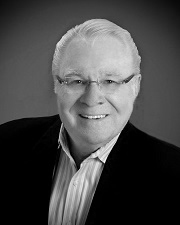
Erin Picou, AuD, PhD, is an associate professor in the Department of Hearing and Speech Sciences at Vanderbilt University Medical Center. She directs the Hearing and Affect Perception Interest (HAPI) laboratory, which focuses on listening effort and emotion perception for adults and school-aged children. She also is actively involved with teaching and mentoring the AuD and PhD students at Vandy.
You are probably familiar with Dr. Picou’s many publications, and it’s not surprising given her research track record that she presently is serving as Editor in Chief of the American Journal of Audiology, and also as section editor for Ear and Hearing. She has earned several awards as an educator, and serves on national advisory boards related to graduate clinical education. She currently is working with a group of Academy of Audiology experts updating guidelines for the management of hearing loss in adulthood.
You’ll enjoy reading Erin’s excellent 20Q, as she demonstrates how clinical data can be used to assess potential benefits of an unbundling procedure. Even if, however, you are more or less locked into a bundling approach, you’ll find that she also provides useful information regarding the interactions among degree of hearing loss, perceived needs, and hearing aid adoption rates.
Gus Mueller, PhD
Contributing Editor
Browse the complete collection of 20Q with Gus Mueller CEU articles at www.audiologyonline.com/20Q
20Q: Hearing Aid Adoption Rates - Unbundling for Improved Efficiency
Learning Outcomes
After reading this article, professionals will be able to:
- Differentiate between bundled and unbundled pricing models in audiology.
- List at least three advantages of conducting a hearing aid consultation as a separate appointment from the diagnostic hearing evaluation.
- Identify the primary factors influencing adoption/non-adoption of hearing aids.

Erin M. Picou
1. What exactly do you mean by “unbundling”?
In this case, I am using the term ‘bundling’ to describe whether or not the cost of hearing aids includes professional services and devices into a single cost (bundled) or whether the price of hearing aid devices is billed separately from the price of professional services into separate costs (unbundled). Unbundling can occur along a continuum from fully bundled to fully unbundled. One example of a fully bundled model would be charging a single cost for a hearing aid that includes all professional services (e.g., consultation, fitting, follow-up, maintenance, repair), in addition to the hearing aid. A fully unbundled model would be charging separately for the hearing aid and every service the patient receives.
2. Why would you think unbundling and hearing aid adoption rates would be related to each other?
As you know, not every adult who could benefit from a hearing aid ends up adopting one. By ‘adopting,’ I mean they purchase and use at least one hearing aid. Estimates of hearing aid adoption rates hover around 40% in the United States (e.g., Humes, 2021; Jorgensen & Barrett, 2022), suggesting that less than half of people who are hearing aid candidates are hearing aid users. This is undesirable for several reasons. First, hearing aids can be so beneficial for improving communication and quality of life that it is unfortunate many candidates are not able to benefit from their use. Increasing hearing aid adoptions would allow us to better serve more adults with hearing loss. Second, low hearing aid adoption rates have implications for clinical practice. If many patients are seen for hearing aid consultations, but few purchase hearing aids, there are financial and efficiency consequences for clinical operations. Therefore, it is important to understand factors that support (or prevent) hearing aid adoption in adults, so that we can better serve patients and run a successful clinical practice. One of the identified barriers to hearing aid adoptions is cost, which then makes it interesting to examine the impact of cost structure, specifically cost unbundling.
3. Hasn’t the field been discussing bundling and unbundling for a long time?
Hearing aid cost unbundling generally has a long and complicated history. Wayne Staab wrote a nice blog series years ago summarizing the history of hearing aid distribution systems over the years (see this blog for the first in the series). Wrapped up in the changes in the way hearing aids are distributed is a discussion about cost bundling. From his blog series, it is clear that the field has been grappling with the bundling and unbundling question for a long time. I won’t repeat his blog series here, but I would like to note some important milestones. Several decades ago (until 1977), audiologists were not dispensing hearing aids, so the prices of devices were inherently unbundled from the price of audiologists’ professional services. When dispensing came into the scope of practice of audiology, several organizations advocated for unbundled models, where services and devices would be charged separately. However, the field started to lean towards primarily using bundled models due to a variety of converging factors in the late 1970s, including a Supreme Court ruling related to antitrust laws. Today, unbundled models are still the minority in the United States (Picou, 2022; Windmill, 2022) and fewer than half of audiologists report using unbundled models (Wince et al., 2022).
4. Is unbundling becoming more popular?
The introduction of over-the-counter (OTC) and direct-to-consumer (DTC) hearing aids made many of us do a critical evaluation of our cost structures. By charging a single price for hearing aids and professional services, the result is that consumers substantially undervalue our professional services. Unbundling has the benefit of potentially being related to lower perceived overall cost of hearing aids by patients (Windmill et al., 2016). That said, unbundling is not feasible or desirable for all practices, and the transitioning from bundled to unbundled cost structures could be difficult. Moreover, bundling as a concept is not going out of fashion. In fact, there is a movement in healthcare more generally to operate under bundled pricing models (see, for example, this website from the Centers for Medicare and Medicaid Services: https://www.cms.gov/priorities/innovation/key-concepts/bundled-payments).
5. Understand, but you still haven’t really explained what unbundling has to do with hearing aid adoptions?
Unbundling is one of the service-related factors that might encourage hearing aid candidates to adopt hearing aids. Other service-related factors have been proposed to increase hearing aid adoptions, many of which have had legislative support, such as the introduction of the OTC class of devices, removal of the medical clearance waiver, and increased direct access to audiologists.
In our specific case at Vanderbilt University Medical Center (VUMC), we wanted to examine our clinical data to evaluate if unbundling hearing aid costs, which includes charging a separate fee for hearing aid consultation appointments, would affect the number of hearing aid candidates in our clinics that adopted hearing aids.
6. Was this just a casual observation or a designed research study?
We did an organized review, and in fact, our findings recently were published in the International Journal of Audiology (Picou et al., 2025). We examined the effects of unbundling on hearing aid adoption rates in our clinic If you want to read full details about the study, you can find it here: https://www.tandfonline.com/doi/full/10.1080/14992027.2024.2443532
In brief, it was a retrospective chart review of adult patients who had never worn a hearing aid before and who were seen for a hearing aid consultation appointment in our Audiology clinic at VUMC. Because all patients specifically were scheduled for a hearing aid consultation, they all had hearing losses that potentially could be helped with the use of hearing aids. We categorized these patients based on the outcome of the consultation appointment as being one of three types of people: hearing aid adopter (purchased at least one hearing aid), hearing aid non-adopter (hearing aid candidate, but declined to purchase a hearing aid), or not a hearing aid candidate. The “not hearing aid candidate” was decided by the clinician and patient together. For example, a patient would have been considered a non-hearing aid candidate if they were seen for a hearing aid consultation appointment, but it turned out they needed to be seen by a physician first for medical necessity. Another example of a patient who would be classified as a “not candidate” would be one who was referred for a cochlear implant workup; someone believed to obtain little benefit from purchasing a new hearing aid at the time.
7. Was this a study you did with your colleagues?
Most certainly! I worked with several people at our Center—Richard Roberts (Vice Chair of Clinical Operations), Todd Ricketts (Vice Chair of Graduate Education), and Rebecca Wiacek. Rebecca was the Associate Director of Adult Amplification at the time, but she now works at Jefferson Hearing in Philadelphia, PA. One of our audiologists, Gina Angley, started the initiative of tracking consultation outcomes when she was at VUMC, before she opened her own practice.
8. How did you specifically study hearing aid adoptions?
Because of the work Gina Angley started, we were able to analyze the records of more than 5000 hearing aid consultation appointments. Specifically, we analyzed the outcomes of hearing aid consultation visits if the patient was an adult (>18 years of age) who had no previous hearing aid experience. We looked only at hearing aid consultation appointments between January 2019 and December 2023. During that time, the cost structure and appointment scheduling processes changed, so we were able to evaluate the effect of these changes on hearing aid adoption rates. Despite the procedural changes, the general appointment structure remained unchanged.
9. It seems like scheduling is different in all clinics. In your clinic, what types of appointments do you have and what happens in each one?
Yes, I’m aware that many practices include the hearing aid consultation as part of the diagnostic appointment (if time allows)—“strike while the iron is hot” often is the logic. However, we do this in a separate appointment. We actually have four general types of hearing-aid related appointments, displayed in Figure 1. As shown, hearing aid consultation appointments specifically focus on device counseling and selection. Prior to May 2023, all adults seen in the clinic for a hearing evaluation were automatically scheduled for a hearing aid consultation appointment. After that time, patients needed to opt into hearing aid consultation appointments. In addition, prior to November 2022, the cost of the consultation appointment was bundled with the price of hearing aids. Since then, there has been a $200 fee for a hearing aid consultation appointment.

Figure 1. General activities associated with each type of hearing-aid related appointment at VUMC audiology.
10. How did the change in appointment scheduling and unbundling affect hearing aid adoption rates?
Figure 2 displays the percent of appointments where it turned out patients were not hearing aid candidates (left panel), not hearing aid adopters (middle panel), or hearing aid adopters (right panel). As you can see in this Figure, after unbundling, hearing aid adoption rates significantly increased 65%, up from 53% prior to unbundling. That is, more hearing aid candidates adopted hearing aids under the unbundled hearing aid cost structure than in the bundled cost structure.
Also visible in the Figure are the changes in the percent of consultations where the patients ended up being not hearing aid candidates or simply not hearing aid adopters. Both of those cases were less common post-unbundling. That is, hearing aid adoptions increased because fewer people who did not adopt hearing aids and fewer people who were not hearing aid candidates were seen for hearing aid consultations.

Figure 2. Percent of consultations, calculated per provider per month, where patients ended up being not hearing aid candidates, not hearing aid adopters, or hearing aid adopters, in the bundled (blue bars) and unbundled (green bars) cost structures. Figure from: https://www.tandfonline.com/doi/full/10.1080/14992027.2024.2443532
11. How about the bottom line? Did the change to an unbundled model lower the total number of devices sold?
Good question. There has been some concern expressed by audiologists about potential negative consequences of unbundling in audiology (Wince et al., 2022). For example, it is possible that the revenues generated by hearing aid sales would decrease because each service and device is charged separately. The thought is that, because there is now a charge for the hearing aid consultation visits, fewer people might be willing to schedule this visit, which might then reduce the number of people ultimately purchasing hearing aids. Fortunately, our data do not show that the number of devices sold declined. Instead, we saw that the same number of devices were dispensed, on average, under the bundled and unbundled models. There was no evidence of lower hearing aid sales due to unbundling.
12. Were there effects of unbundling on other clinical metrics?
Yes! Our data support more efficient use of clinical time. The increase in hearing aid adoption rates was largely the result of fewer patients being seen in the clinic who were not hearing aid candidates or who were not interested in adopting hearing aids. Specifically, providers were dispensing the same number of devices each month, although the absolute number of hearing aid consultations they performed decreased. The combination of these findings demonstrates that clinical time could be used more efficiently in the unbundled hearing aid price model, where all patients paid a fee for the consultation appointment and the evaluation and consultation appointments were decoupled from each other.
The more efficient use of clinical time had benefits on other clinical metrics, such as wait time to see clinical providers. In our clinic, we track the number of new patients who are seen within 14 days of their initial contact. Our new patients seen within 14 days improved from 25.8% in 2022 to 47.8% in 2023 for hearing aid consultation appointments. Because unbundling allowed for appointment times to be focused more on patients who were interested in adopting hearing aids, new patients could be seen more quickly.
Importantly, we believe that for patients who are not hearing aid candidates, the hearing aid consultation appointment is arguably not necessary. The standard hearing evaluation appointment already involves counseling and personalized recommendations for the patient based on their situation and diagnostic test results. Therefore, reducing the number of non-candidates who are seen for hearing aid consultations might be feasible with careful scheduling. More complicated would be the task of identifying candidates who will be non-adopters. We looked into factors that separated adopters from non-adopters and also stated reasons for non-adoption.
13. Did unbundling change the reasons hearing aid candidates did not adopt hearing aids?
The changes in appointment structure and bundling did not affect the justifications patients gave for not adopting hearing aids. To track the reasons for non-adoption over time, clinicians had been classifying the stated justifications for non-adoption into one of 6 reasons, taken loosely from the broader sales literature (Tan, 2020).
The classifications are:
- No Hurry (patient believed they could wait)
- No Worry (patient not bothered by hearing loss)
- No Money (patient could not afford hearing aids)
- No Honey (patient needed approval from their partner)
- No Value (patient did not believe hearing aids had value)
- Other. Example reasons in the ‘other’ category included patients who were price shopping and those who lived far away from the clinic.
The percent of non-adopters that stated each of these six reasons for not adopting hearing aids in unbundled and bundled models are displayed in Figure 3. The figure shows that the reasons for non-adoption were generally the same before and after unbundling.

Figure 3. Percent of patients who provided each reason for not adopting hearing aids after the hearing aid consultation appointment before (blue) and after (green) unbundling cost structure in the clinic. There were no differences between unbundled and bundled models. Figure from: https://www.tandfonline.com/doi/full/10.1080/14992027.2024.2443532
14. Does the distribution of the different reasons make sense to you?
More or less, yes. Note that in Figure 3, the reasons for non-adoption are rank-ordered by frequency, listed from most to least common. The most common reasons for non-adoption were need-based, that is, patients expressing they were not in a hurry or not bothered by hearing loss. The third most common reason was that hearing aids were too expensive for their financial situation. Relatively few people said they did not see value in hearing aids.
15. This finding seems at odds with other recommendations that say hearing aid costs are a primary contributor to hearing aid non-adoptions. How can we reconcile these data with conventional wisdom?
There have been lots of discussions about the cost of hearing aids and how the cost might be limiting hearing aid adoptions (e.g., Donahue et al., 2010; Warren & Grassley, 2017). Our data, however, are consistent with other evidence suggesting that perceived hearing difficulties and expected benefit also play a large role in hearing aid adoptions. For example, recent data demonstrate that only half of adults with hearing difficulty would adopt hearing aids, even if the hearing aids were fully covered by insurance (Windmill, 2022). Therefore, our data support the importance of perceived need as one of the primary contributing factors that support hearing aid adoption, with cost and perceived value playing smaller roles for many patients.
16. From your study, is there other evidence supporting the conclusion that perceived need is a primary factor in hearing aid adoption?
We looked at several different factors. In addition to examining the effects of unbundling on hearing aid adoption rates, we examined demographic and audiologic variables associated with hearing aid adoptions. Specifically, we examined differences between patients who did and did not adopt hearing aids on a number of dimensions, including: age, gender, reports of tinnitus, pure-tone average, word recognition scores (in quiet), sentence recognition performance in noise, and self-reported hearing difficulty. We looked at differences in these dimensions between hearing aid adopters and non-adopters (independent of bunding price structure).
17. What differences did you find?
As expected based on the stated reasons people did not adopt hearing aids, we also found hearing aid non-adopters were less likely to report perceived hearing difficulty in their two most important listening situations that they identified on the Client Oriented Scale of Improvement (COSI; Dillon et al., 1997).
The clinicians in our clinic routinely use the COSI during the hearing aid consultation process to help identify important listening situations for patients and to evaluate perceived difficulties in these listening situations without hearing aids. It also provides a baseline for eventual evaluation of hearing aid benefit in the same situations (should a patient adopt hearing aids). In our study, non-adopters were most likely to report that they could hear ‘almost always’ or ‘most of the time’ in their most important listening situations, but hearing aid adopters were most likely to report that they could only hear about ‘half of the time’ in their most important listening situations identified on the COSI. This suggests that non-adopters are likely hearing pretty well in situations that are important to them, but hearing aid adopters have more trouble in situations that are important to them.
18. Any other interesting findings?
We also found that non-adopters had lower (better) better pure-tone average thresholds on average than did adopters (although the difference was relatively small, see Figure 4). In addition, non-adopters had better word recognition scores (average worse ear score = 86%) than did hearing aid adopters (average worse ear = 80%). Non-adopters also had better sentence-in-noise recognition scores than did hearing aid adopters (bilateral QuickSIN Loss as measured bilaterally in the sound field of 3.8 dB and 5.4 dB, respectively). Although these differences were relatively small (especially the differences in audiometric scores), the findings are consistent with the idea that people who have more hearing difficulty are more likely to adopt hearing aids than people who have less hearing difficulty.

Figure 4. Mean (+/- 1 standard deviation) audiometric thresholds in the right (red) and left (blue) ears for patients who did and did not adopt hearing aids.
19. This is a lot of information. Are there key takeaways I should remember?
By unbundling cost services and de-coupling the evaluation and consultation appointments, we improved clinical efficiency by increasing hearing aid adoption rates and decreasing the number of non-candidates who were seen in those appointments. Adoption rates, of course, were still not 100%, so it is important to keep searching for barriers and facilitators to hearing aid adoption. Among candidates who were seen in our clinics, the ones who did adopt hearing aids tended to have more perceived hearing difficulty and more audiometric hearing loss. Those who did not adopt hearing aids primarily declined, citing lack of need, with cost being only the 3rd most common reason. I believe these findings are useful because they provide some evidence that there are service-delivery factors that can affect hearing aid adoption rates (cost unbundling and appointment decoupling). These data could support clinical decision-making, should a clinic administrator be considering decoupling or unbundling.
20. I don’t work at a place like VUMC, and unbundling simply isn’t feasible for me. Does this study show us anything generalizable outside of your clinic?
In addition to providing information about the importance of hearing difficulties (perceived and measured) for hearing aid adoption, one message that I hope comes from this work is that it might be possible to increase clinical efficiency and hearing aid adoption rates through careful scheduling. By unbundling and de-coupling the hearing evaluation and hearing aid consultation appointments, we saw hearing aid adoption rates increase. But it is not clear that the unbundling is fully necessary to see these benefits. Recall that the benefits we saw in terms of changing the service delivery model were partly due to the reduction in the number of non-candidates who were seen for hearing aid consultation appointments. There are likely many other ways to achieve the same effect without unbundling. Today, I am simply reporting on the results of the approach that we took, but clever practitioners will explore and implement other approaches that might work equally well, or even better, to ensure that the people who are seen for hearing aid consultations are those most likely to need the consultation services.
References
Dillon, H., James, A., & Ginis, J. (1997). Client Oriented Scale of Improvement (COSI) and its relationship to several other measures of benefit and satisfaction provided by hearing aids. Journal of the American Academy of Audiology, 8(1), 27 - 43.
Donahue, A., Dubno, J. R., & Beck, L. (2010). Accessible and affordable hearing health care for adults with mild to moderate hearing loss. Ear and Hearing, 31(1), 2-6. https://doi.org/10.1097/AUD.0B013E3181CBC783
Humes, L. E. (2021). Differences between older adults who do and do not try hearing aids and between those who keep and return the devices. Trends in Hearing, 25, 23312165211014329.
Jorgensen, L. E., & Barrett, R. E. (2022). Relating factors and trends in hearing device adoption rates to opportunities for hearing health care providers. Seminars in Hearing, 43(04), 289-300. https://doi.org/10.1055/s-0042-1758374.
Picou, E. M. (2022). Hearing aid benefit and satisfaction results from the MarkeTrak 2022 Survey: Importance of features and hearing care professionals. Seminars in Hearing, 43(04), 301-316. https://doi.org/10.1055/s-0042-1758375
Picou, E. M., Wiacek, R., Ricketts, T. A., & Roberts, R. A. (2025). Hearing aid adoption rates among adults without hearing aid experience in an audiology clinic before and after price unbundling. International Journal of Audiology, published ahead of print, 1-10.
Tan, R. (2020). Every Sale has Five Main Obstacles: No Need, No Money, No Hurry, No Desire, No Trust. Reed Tandigital. https://reedtan.com/every-sale-has-five-main-obstacles-no-need-no-money-no-hurry-no-desire-no-trust/
Warren, E., & Grassley, C. (2017). Over-the-counter hearing aids: the path forward. JAMA internal medicine, 177(5), 609-610.
Wince, J. R., Emanuel, D. C., Hendy, N. T., & Reed, N. S. (2022). Change resistance and clinical practice strategies in audiology. Journal of the American Academy of Audiology, 33(05), 293-300. https://doi.org/10.1055/a-1840-9737
Windmill, I. M. (2022). The financing of hearing care: what we can learn from MarkeTrak 2022. Seminars in Hearing, 43(04), 339-347. https://doi.org/10.1055/s-0042-1758400
Windmill, I. M., Bishop, C., Elkins, A., Johnson, M. F., & Sturdivant, G. (2016). Patient complexity charge matrix for audiology services: A new perspective on unbundling. Seminars in Hearing, 37(02), 148-160. https://doi.org/10.1055/s-0036-1579703
Citation
Picou, E.M. (2025). 20Q: Hearing aid adoption rates - unbundling for improved efficiency. AudiologyOnline, Article 29354. Available at www.audiologyonline.com