
Continuing Education
1
https://www.audiologyonline.com/audiology-ceus/course/pediatric-evoked-potentials-principles-and-42091
Pediatric Evoked Potentials: Principles and Clinical Practice
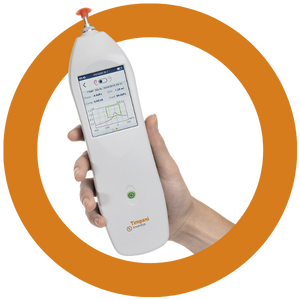
This webinar provides a clinically focused overview of pediatric auditory evoked potentials, with particular emphasis on Auditory Brainstem Response (ABR) as an objective tool for assessing auditory pathway integrity in newborns, infants, and young children who are non-verbal, uncooperative, or difficult to evaluate behaviorally. It reviews developmental and technical considerations in pediatric ABR, as well as its role in newborn hearing screening, threshold estimation, differential diagnosis of conductive and sensorineural hearing loss, retrocochlear dysfunction, and auditory neuropathy spectrum disorder (ANSD).
auditory, textual, visual
129
USD
Subscription
Unlimited COURSE Access for $129/year
OnlineOnly
AudiologyOnline
www.audiologyonline.com
Pediatric Evoked Potentials: Principles and Clinical Practice
This webinar provides a clinically focused overview of pediatric auditory evoked potentials, with particular emphasis on Auditory Brainstem Response (ABR) as an objective tool for assessing auditory pathway integrity in newborns, infants, and young children who are non-verbal, uncooperative, or difficult to evaluate behaviorally. It reviews developmental and technical considerations in pediatric ABR, as well as its role in newborn hearing screening, threshold estimation, differential diagnosis of conductive and sensorineural hearing loss, retrocochlear dysfunction, and auditory neuropathy spectrum disorder (ANSD).
42091
Online
PT90M
Presented by Stavros Hatzopoulos, PhD
Course: #42091Level: Intermediate1.5 Hours
AAA/0.15 Intermediate; ACAud inc HAASA/1.5; AHIP/1.5; BAA/1.5; CAA/1.5; Calif. SLPAB/1.5; IACET/0.2; IHS/1.5; Kansas, LTS-S0035/1.5; NZAS/2.0; SAC/1.5; TX TDLR, #142/1.5 Manufacturer
This webinar provides a clinically focused overview of pediatric auditory evoked potentials, with particular emphasis on Auditory Brainstem Response (ABR) as an objective tool for assessing auditory pathway integrity in newborns, infants, and young children who are non-verbal, uncooperative, or difficult to evaluate behaviorally. It reviews developmental and technical considerations in pediatric ABR, as well as its role in newborn hearing screening, threshold estimation, differential diagnosis of conductive and sensorineural hearing loss, retrocochlear dysfunction, and auditory neuropathy spectrum disorder (ANSD).
2
https://www.audiologyonline.com/audiology-ceus/course/meniere-s-disease-in-children-41987
Meniere’s Disease in Children
This course looks into the phenotype, genesis, pathophysiology, epidemiology, diagnosis, and management of Meniere’s syndrome in children. It is filled with real-world cases the author encountered while working in specialized pediatric vestibular centers.
auditory, textual, visual
129
USD
Subscription
Unlimited COURSE Access for $129/year
OnlineOnly
AudiologyOnline
www.audiologyonline.com
Meniere’s Disease in Children
This course looks into the phenotype, genesis, pathophysiology, epidemiology, diagnosis, and management of Meniere’s syndrome in children. It is filled with real-world cases the author encountered while working in specialized pediatric vestibular centers.
41987
Online
PT90M
Presented by Soumit Dasgupta, MD
Course: #41987Level: Intermediate1.5 Hours
AAA/0.15 Intermediate; ACAud inc HAASA/1.5; AHIP/1.5; BAA/1.5; CAA/1.5; Calif. SLPAB/1.5; IACET/0.2; IHS/1.5; Kansas, LTS-S0035/1.5; NZAS/2.0; SAC/1.5; TX TDLR, #142/1.5 Manufacturer
This course looks into the phenotype, genesis, pathophysiology, epidemiology, diagnosis, and management of Meniere’s syndrome in children. It is filled with real-world cases the author encountered while working in specialized pediatric vestibular centers.
3
https://www.audiologyonline.com/audiology-ceus/course/exploring-vestibular-dysfunction-in-pediatric-41817
Exploring Vestibular Dysfunction in Pediatric Developmental and Learning Disorders
This webinar examines the critical role of the vestibular system in pediatric developmental milestones and learning processes, highlighting its influence on motor development, balance, gaze stabilization, sensory integration, and cognitive functions. It explores the emerging evidence linking vestibular dysfunction to developmental delays, learning disorders, speech and language impairments, and neurodevelopmental conditions, emphasizing the importance of early identification, comprehensive vestibular assessment, and targeted multidisciplinary intervention.
auditory, textual, visual
129
USD
Subscription
Unlimited COURSE Access for $129/year
OnlineOnly
AudiologyOnline
www.audiologyonline.com
Exploring Vestibular Dysfunction in Pediatric Developmental and Learning Disorders
This webinar examines the critical role of the vestibular system in pediatric developmental milestones and learning processes, highlighting its influence on motor development, balance, gaze stabilization, sensory integration, and cognitive functions. It explores the emerging evidence linking vestibular dysfunction to developmental delays, learning disorders, speech and language impairments, and neurodevelopmental conditions, emphasizing the importance of early identification, comprehensive vestibular assessment, and targeted multidisciplinary intervention.
41817
Online
PT60M
Presented by Jeyasakthy Saniasiaya, MD, MMED ORL-HNS (Gold Medal), FEBORLHNS
Course: #41817Level: Intermediate1 Hour
AAA/0.1 Intermediate; ACAud inc HAASA/1.0; AHIP/1.0; BAA/1.0; CAA/1.0; Calif. SLPAB/1.0; IACET/0.1; IHS/1.0; Kansas, LTS-S0035/1.0; NZAS/1.0; SAC/1.0; TX TDLR, #142/1.0 Manufacturer
This webinar examines the critical role of the vestibular system in pediatric developmental milestones and learning processes, highlighting its influence on motor development, balance, gaze stabilization, sensory integration, and cognitive functions. It explores the emerging evidence linking vestibular dysfunction to developmental delays, learning disorders, speech and language impairments, and neurodevelopmental conditions, emphasizing the importance of early identification, comprehensive vestibular assessment, and targeted multidisciplinary intervention.
4
https://www.audiologyonline.com/audiology-ceus/course/remote-camera-vhit-what-it-41771
Remote Camera vHIT: What Is It and How Does It Fit Into My Pediatric Vestibular Test Battery?
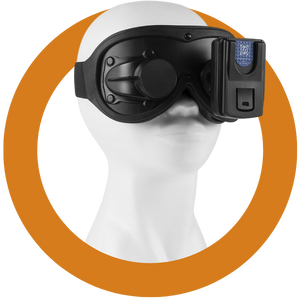
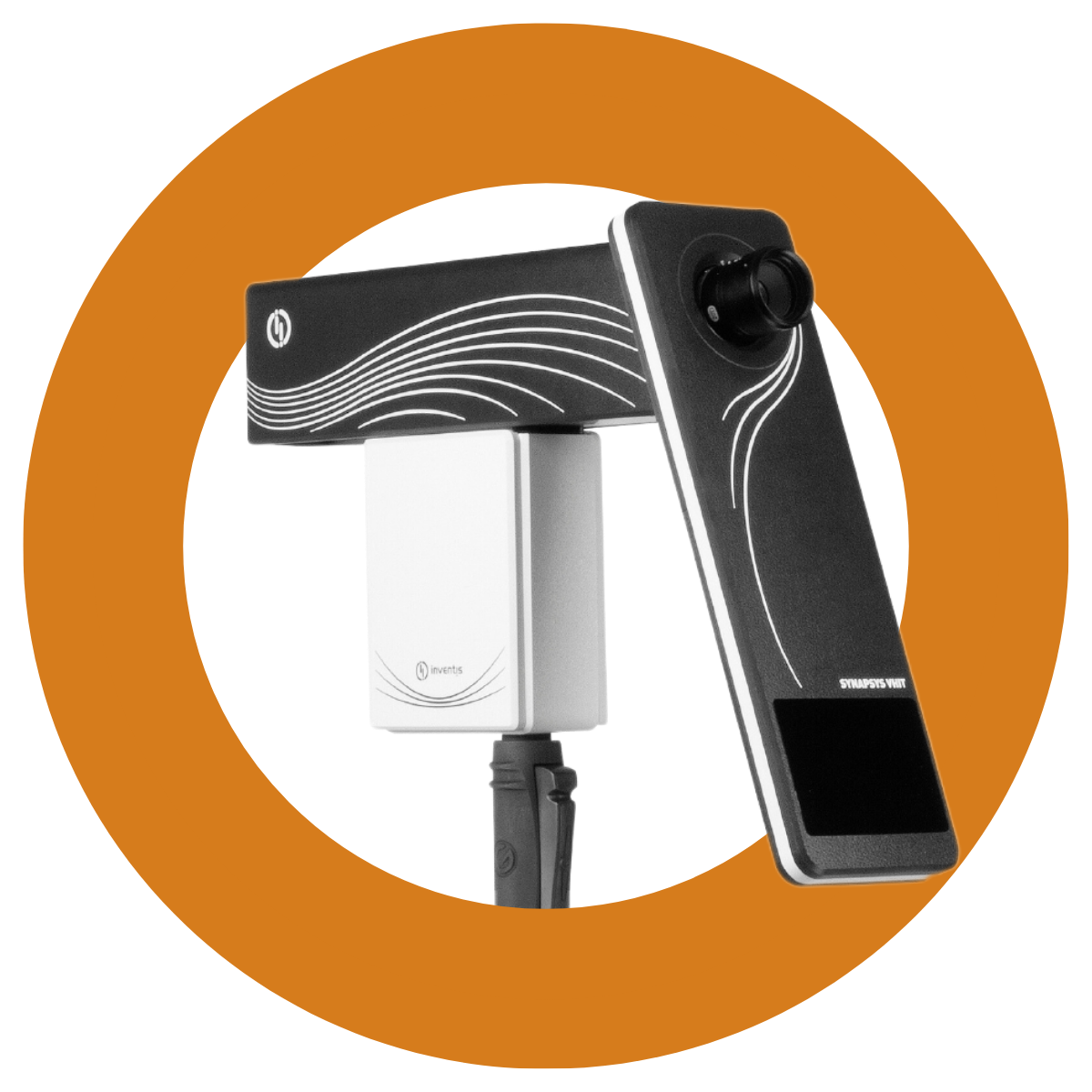
Children with hearing loss are at increased risk for vestibular loss. Several important effects of vestibular loss can be improved if identified and treated. As such, there is growing emphasis on identifying vestibular loss in infants and young children. The remote camera video head impulse test (vHIT) is a new tool used to assess vestibular function in young children. The purpose of this presentation is to review remote camera vHIT and where it fits in pediatric vestibular assessment protocols. In this presentation, the effects of vestibular loss in children, the importance of pediatric vestibular assessment, and administration and interpretation of remote camera vHIT will be reviewed. Case studies will be used to highlight how remote camera vHIT can be implemented in pediatric vestibular assessment.
auditory, textual, visual
129
USD
Subscription
Unlimited COURSE Access for $129/year
OnlineOnly
AudiologyOnline
www.audiologyonline.com
Remote Camera vHIT: What Is It and How Does It Fit Into My Pediatric Vestibular Test Battery?
Children with hearing loss are at increased risk for vestibular loss. Several important effects of vestibular loss can be improved if identified and treated. As such, there is growing emphasis on identifying vestibular loss in infants and young children. The remote camera video head impulse test (vHIT) is a new tool used to assess vestibular function in young children. The purpose of this presentation is to review remote camera vHIT and where it fits in pediatric vestibular assessment protocols. In this presentation, the effects of vestibular loss in children, the importance of pediatric vestibular assessment, and administration and interpretation of remote camera vHIT will be reviewed. Case studies will be used to highlight how remote camera vHIT can be implemented in pediatric vestibular assessment.
41771
Online
PT60M
Presented by Kristen Janky, PhD, CCC-A
Course: #41771Level: Intermediate1 Hour
AAA/0.1 Intermediate; ACAud inc HAASA/1.0; AHIP/1.0; BAA/1.0; CAA/1.0; Calif. SLPAB/1.0; IACET/0.1; IHS/1.0; Kansas, LTS-S0035/1.0; NZAS/1.0; SAC/1.0; TX TDLR, #142/1.0 Manufacturer
Children with hearing loss are at increased risk for vestibular loss. Several important effects of vestibular loss can be improved if identified and treated. As such, there is growing emphasis on identifying vestibular loss in infants and young children. The remote camera video head impulse test (vHIT) is a new tool used to assess vestibular function in young children. The purpose of this presentation is to review remote camera vHIT and where it fits in pediatric vestibular assessment protocols. In this presentation, the effects of vestibular loss in children, the importance of pediatric vestibular assessment, and administration and interpretation of remote camera vHIT will be reviewed. Case studies will be used to highlight how remote camera vHIT can be implemented in pediatric vestibular assessment.
5
https://www.audiologyonline.com/audiology-ceus/course/bascule-maneuver-for-management-atypical-41670
Bascule Maneuver for the Management of Atypical Posterior Canal BPPV
While typical posterior canal-BPPV is successfully managed with standard repositionings in the vast majority of cases, atypical variants, where otoconia settle in uncommon/stenotic canal tracts generating unusual positional nystagmus, are usually refractory and their management is still debated. They include posterior canal - cupulolithiasis, apogeotropic posterior canal - BPPV, sitting - up vertigo and posterior canalith jam. In these conditions, impulsive maneuvers are usually needed. While Brandt-Daroff exercises aim to disperse debris using random rotations, we designed a tailored impulsive maneuver along the affected canal plane (the bascule maneuver), aiming to treat these variants or to convert them in typical forms, thus allowing to localize otoconia in uncertain cases. Here we present this novel physical therapy and discuss the results of our preliminary study on the Bascule maneuver, with a series of videos and clinical cases drawn from personal experience.
auditory, textual, visual
129
USD
Subscription
Unlimited COURSE Access for $129/year
OnlineOnly
AudiologyOnline
www.audiologyonline.com
Bascule Maneuver for the Management of Atypical Posterior Canal BPPV
While typical posterior canal-BPPV is successfully managed with standard repositionings in the vast majority of cases, atypical variants, where otoconia settle in uncommon/stenotic canal tracts generating unusual positional nystagmus, are usually refractory and their management is still debated. They include posterior canal - cupulolithiasis, apogeotropic posterior canal - BPPV, sitting - up vertigo and posterior canalith jam. In these conditions, impulsive maneuvers are usually needed. While Brandt-Daroff exercises aim to disperse debris using random rotations, we designed a tailored impulsive maneuver along the affected canal plane (the bascule maneuver), aiming to treat these variants or to convert them in typical forms, thus allowing to localize otoconia in uncertain cases. Here we present this novel physical therapy and discuss the results of our preliminary study on the Bascule maneuver, with a series of videos and clinical cases drawn from personal experience.
41670
Online
PT150M
Presented by Andrea Castellucci, MD
Course: #41670Level: Advanced2.5 Hours
AAA/0.25 Advanced; ACAud inc HAASA/2.5; AHIP/2.5; BAA/2.5; CAA/2.5; Calif. SLPAB/2.5; IACET/0.3; IHS/2.5; Kansas, LTS-S0035/2.5; NZAS/3.0; SAC/2.5; TX TDLR, #142/3.0 Manufacturer
While typical posterior canal-BPPV is successfully managed with standard repositionings in the vast majority of cases, atypical variants, where otoconia settle in uncommon/stenotic canal tracts generating unusual positional nystagmus, are usually refractory and their management is still debated. They include posterior canal - cupulolithiasis, apogeotropic posterior canal - BPPV, sitting - up vertigo and posterior canalith jam. In these conditions, impulsive maneuvers are usually needed. While Brandt-Daroff exercises aim to disperse debris using random rotations, we designed a tailored impulsive maneuver along the affected canal plane (the bascule maneuver), aiming to treat these variants or to convert them in typical forms, thus allowing to localize otoconia in uncertain cases. Here we present this novel physical therapy and discuss the results of our preliminary study on the Bascule maneuver, with a series of videos and clinical cases drawn from personal experience.
Videos
October 15, 2025
This video demonstrates vestibular testing in a 7-month-old infant using the SYNAPSYS vHIT remote camera system, without a mask. A relative supports the child during this quick test, allowing reliable...
Watch Video
October 15, 2025
In this demonstration, the SYNAPSYS vHIT remote camera system, without a mask, is used to perform a quick vestibular test on a 4-year-old child. The protocol is the same as in adults, showing how pedi...
Watch Video
August 1, 2025
The Synapsys VHIT (Video Head Impulse Test) system represents a fundamental step forward in the evaluation of the vestibular system.Unlike other video-HIT examination systems on the market, the Synaps...
Watch Video
News
Pediatric Vestibular Care: Advancing Assessment with Remote-Camera vHIT
April 15, 2026
Florida, USA (April 2026) - Children with hearing loss face a significantly higher risk of vestibular dysfunction. However, early identification and intervention can dramatically improve outcomes for motor development, stability, and overall quality
Inventis at AAA 2026: Showcasing Innovation and Pediatric Vestibular Breakthroughs in San Antonio
March 16, 2026
Inventis is proud to announce its participation as a sponsor at the AAA 2026 + HearTECH Expo taking place in the historic city of San Antonio, Texas, from April 22 to 25.
Introducing IN TUNE – Conversations on Audiology & Balance
February 12, 2026
As Inventis celebrates 20 years of innovation in audiology and balance diagnostics, the Academia initiative continues to evolve, expanding beyond webinars to embrace new formats of scientific dialogue.
Articles
Understanding the Impact of Symphonia on Hearing Aid Users: A Survey-Based Analysis
July 22, 2024
Anna Scala
This course reviews a study that explores the impact of Symphonia, a software designed to create immersive soundscapes, on hearing aid users. The study includes a survey of 28 patients, highlighting the software's effectiveness in enhancing patient satisfaction, involvement, and understanding of real-world sounds.
Ask the Expert
What does the bascule maneuver involve, and in which BPPV variants is it applied in clinical practice?
March 30, 2026
Andrea Castellucci, MD
What does the bascule maneuver involve, and in which BPPV variants is it applied in clinical practice?
How Can Clinicians Use Advanced vHIT Interpretation to Improve Diagnosis and Patient Management?
December 15, 2025
Vishal Pawar
How Can Clinicians Use Advanced vHIT Interpretation to Improve Diagnosis and Patient Management?
How Can Clinicians Apply and Interpret the Video Head Impulse Test (vHIT) in Everyday Practice?
November 14, 2025
Vishal Pawar
How Can Clinicians Apply and Interpret the Video Head Impulse Test (vHIT) in Everyday Practice?
Interviews
Upbeat Nystagmus: A Clinical and Pathophysiological Aid
May 11, 2026
V. Marcelli, MD
Interview with Dr. Vincenzo Marcelli
Beyond the Manual: A Homemade SHIMP Approach Using Infrared Goggles
April 15, 2026
V. Marcelli, MD
The head impulse test has revolutionized the clinical evaluation of vestibular function, and the introduction of the SHIMP paradigm has further expanded the understanding of vestibulo-ocular reflex dynamics.
AI Won’t Replace the Hearing Healthcare Professional, It Will Enhance Them
January 15, 2026
Blaise Delfino, MS, HIS
Blaise Delfino shares his vision for the future of hearing healthcare: a world where technology, empathy, and collaboration redefine what it means to truly hear