

Question
How are DSL-BCD 2.0, automated fit-to-target, and surface microphone technology overcoming the historical challenges of objective bone conduction verification?
Answer
The historical challenge of verifying bone conduction systems has been a lack of objective verification measures compared to air conduction systems. Clinicians have traditionally relied on behavioral measures like aided audiograms or functional gain, which have several well-known limitations for verification, including limited frequency resolution and poor test-retest reliability. Objective verification is now considered best practice for fitting bone conduction instruments. The Verifit Skull Simulator supports this need for objective verification with abutment-based devices, measuring vibrational force in micronewtons, plotting device output in dB force level, and enabling the use of various test box tests as with air conduction systems. Recent software updates have integrated the DSL-BCD 2.0 fitting formula into the Speechmap test environment, enhancing clinical capabilities. This development supports target and audibility-based verification of softband fittings along with the use of standard bone conduction oscillator thresholds when in-situ audiometry is not feasible - aspects that are particularly relevant with pediatric patients.
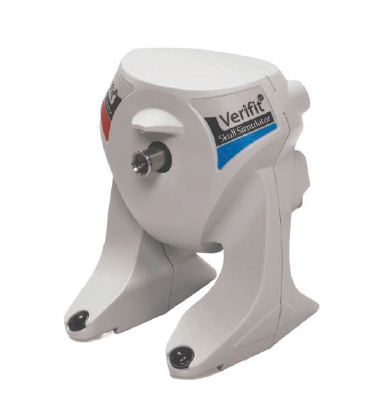
The Verifit Skull Simulator acts as a specialized coupler designed to measure vibrational force for abutment-based bone conduction devices.
Efficiency in the Speechmap fitting process with bone conduction devices has recently been improved through automated verification to target technology. VerifitLINK enables the exchange of measurement and control data between the fitting system and the fitting software, allowing the software to directly run tests, obtain targets, and compare measurements. This automation simplifies the verification workflow and, as shown in associated research, can cut verification time in half without negatively impacting accuracy versus traditional manual approaches. Through this approach, the software determines how far the initial first-fit measurement deviates from the prescription and automatically adjusts device programming to align the aided response with targets. This process enables clinicians to realize the full benefits of verification, documented in the research literature compared to unverified fittings, including enhanced audibility, greater patient satisfaction, and fewer follow-up visits by ensuring an accurate fit from the outset.
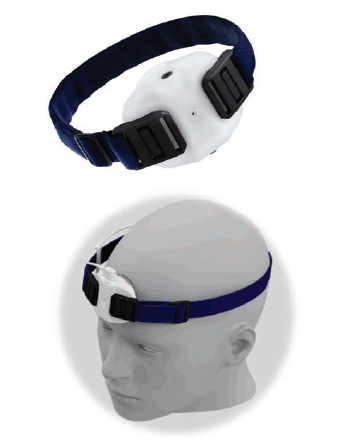
The emerging Real Bone Measurement (RBM) surface microphone allows for the objective verification of a wide range of bone conduction systems directly on the patient's head.
To enable verification of a wider range of non-abutment-based bone conduction devices, such as active transcutaneous or implanted transducer systems, emerging real bone measurement (RBM) surface microphone technology offers a promising future direction. This head-worn accessory supports the measurement of bone conduction device vibration directly on a patient's forehead, with active development underway to integrate this measurement method within the Verifit2 fitting system. Conceptually equivalent to real-ear measurement, RBM technology supports clinicians’ ability to adjust bone conduction device programming to match prescriptive targets or evaluate aided output relative to the patient's thresholds. Research suggests that the RBM microphone approach is clinically feasible across a range of coupling types, including percutaneous, active, and passive transcutaneous systems. Researchers have also noted how RBM measurements can objectively inform fitting adjustments to improve aided audibility, as confirmed by repeat measures and speech testing. Overall, emerging RBM technology points towards a future where objective verification and its associated benefits can be applied across a broader range of BCDs in routine clinical care.
This ATE was generated from the Audioscan course: Modern Approaches to Bone Conduction Device Verification: Current Methods, Enhancements, and Future Directions, presented by John Pumford, AuD (2026)
Continued and its subsidiaries provide professional education authored by qualified Subject Matter Experts for continuing education purposes. These materials are intended for educational purposes and do not constitute medical advice or a substitute for individual clinical judgment. Continued is not a clinical healthcare provider; the licensed professional is solely responsible for ensuring that the application of any techniques or information presented is within their legal scope of practice and jurisdictional requirements.