

Question
What is the significance of the FLEX34 electrode?
Answer
The FLEX34 electrode, developed by MED-EL, is the longest cochlear implant electrode array currently available, designed to provide electrical hearing stimulation across the full length of the inner ear. This is particularly significant for individuals with larger-than-average cochleae, as shorter electrodes may not be able to stimulate the entire auditory nerve, leading to suboptimal hearing outcomes. The FLEX34 addresses this by offering a customized solution that can be tailored to the patient's specific anatomy, ensuring a better place-pitch mapping and a more natural hearing experience. MED-EL's OTOPLAN On Demand service further enhances this by providing clinicians with detailed, patient-specific cochlear measurements to assist in selecting the optimal electrode array.
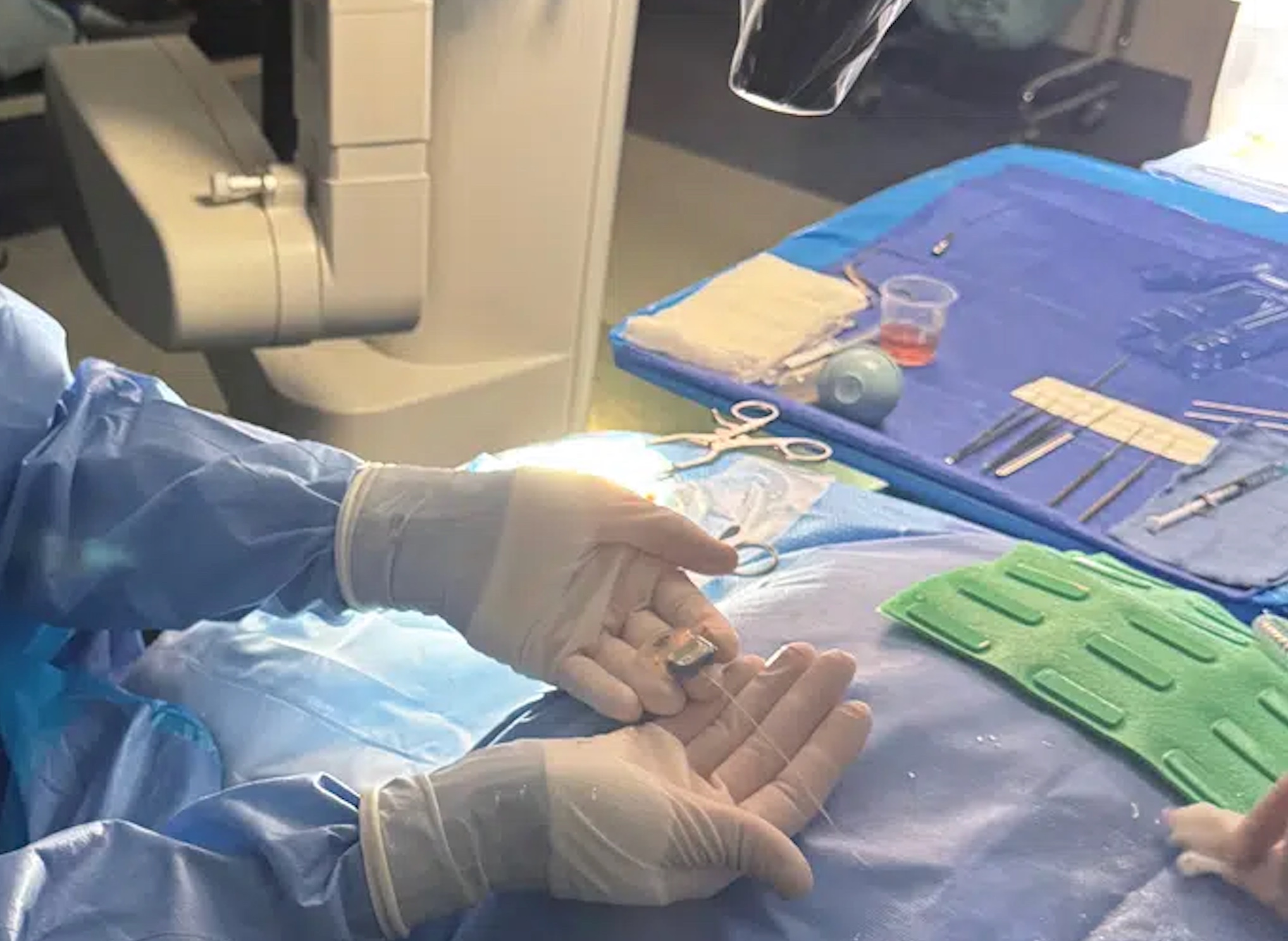
The University of Kentucky (UK) HealthCare's Ear, Nose, and Throat (ENT) Clinic played a pioneering role in the implementation of this new technology in the United States. In December, a 10-year-old patient at UK became the first person in the country to receive the FLEX34 electrode. This groundbreaking surgery was performed by Dr. Nathan Cass, an otology and neurotology specialist at UK, who recognized that the patient's unusually large cochlea made him an ideal candidate for this new, longer electrode. This event highlights MED-EL and UK's commitment to providing cutting-edge care and staying at the forefront of research and technological advancements in the field of hearing health.
For more information, please click here.
References
Li, H., Helpard, L., Ekeroot, J., Rohani, S. A., Zhu, N., Rask-Andersen, H., Ladak, H. M., & Agrawal, S. (2021). Three-dimensional tonotopic mapping of the human cochlea based on synchrotron radiation phase-contrast imaging. Scientific Reports, 11(1). https://doi.org/10.1038/s41598-021-83225-w
Helpard, L., Li, H., Rohani, S. A., Zhu, N., Rask-Andersen, H., Agrawal, S., & Ladak, H. M. (2021). An approach for individualized cochlear frequency mapping determined from 3D synchrotron radiation phase-contrast imaging. IEEE Transactions on Biomedical Engineering, 68(12), 3602–3611. https://doi.org/10.1109/tbme.2021.3080116
Breitsprecher, T. M., Baumgartner, W. D., Brown, K., Dazert, S., Doyle, U., Dhanasingh, A., … & Weiss, N. M. (2023). Effect of Cochlear Implant Electrode Insertion Depth on Speech Perception Outcomes: A Systematic Review. Otology & Neurotology Open, 3(4), e045.
Li, H., Schart-Moren, N., Rohani, S., A., Ladak, H., M., Rask-Andersen, A., & Agrawal, S. (2020). Synchrotron Radiation-Based Reconstruction of the Human Spiral Ganglion: Implications for Cochlear Implantation. Ear Hear. 41(1).
Dillon, M. T., Canfarotta, M. W., Buss, E., Rooth, M. A., Richter, M. E., Overton, A. B., Roth, N. E., Dillon, S. M., Raymond, J. H., Young, A., Pearson, A. C., Davis, A. G., Dedmon, M. M., Brown, K. D., & O’Connell, B. P. (2023). Influence of Electric Frequency-to-Place Mismatches on the Early Speech Recognition Outcomes for Electric–Acoustic Stimulation Users. American Journal of Audiology, 32(1), 251–260. https://doi.org/10.1044/2022_aja-21-00254
Continued and its subsidiaries provide professional education authored by qualified Subject Matter Experts for continuing education purposes. These materials are intended for educational purposes and do not constitute medical advice or a substitute for individual clinical judgment. Continued is not a clinical healthcare provider; the licensed professional is solely responsible for ensuring that the application of any techniques or information presented is within their legal scope of practice and jurisdictional requirements.