

AI Won’t Replace the Hearing Healthcare Professional, It Will Enhance Them
AudiologyOnline: Looking ahead to 2035, what breakthrough technologies do you believe will redefine the hearing healthcare experience from the first appointment to long-term follow-up?
Blaise M. Delfino, M.S. – HIS: Answering that question feels heavy because it’s deeply personal to me. I grew up around hearing healthcare, so I’ve had a front-row seat to how it’s evolved. Seeing the rise of completely different delivery models like big box, the shift toward accessible technology, and the digital transformation of care has been astounding.
When I think about where we’re headed, I don’t just see better devices, I see better collaboration. The next decade will demand that hearing care professionals work more closely with speech-language pathologists, psychologists, physical therapists, neuroscientists, and professionals of the like. A cross-disciplinary, holistic approach to care will be the standard.
We live in an era where people are more health conscious than ever. They track their sleep, their heart rate, their steps. They want to live longer and live better. That’s why I believe hearing healthcare will increasingly be part of whole-person wellness, connected to mental health, cognition, and even physical balance.
At the same time, the stigma around hearing loss is fading. More people are embracing hearing technology as part of a healthy lifestyle, and as professionals, we’re doing a better job educating the public. The future of hearing care will be defined by integration, awareness, and collaboration, and it’s coming faster than we think.
AudiologyOnline: AI and deep neural networks are moving from buzzwords to daily clinical tools. Wow will they transform personalization, speech-in-noise performance, and patient outcomes in the real world?
Blaise M. Delfino, M.S. – HIS: We are living through one of the most exciting times in hearing technology. Artificial intelligence and deep neural networks have opened entirely new ways to process sound. I often compare it to the Dolby Atmos revolution in sound engineering. Suddenly, you’re not just hearing left and right, you’re immersed in a soundscape that goes beyond 3D. The technology isn’t just learning your environment; it’s learning you, the familiar voices you love, the acoustic patterns of your daily life, and the way you naturally listen. In five to ten years, I believe hearing technology will deliver a truly personalized auditory world, where every sound feels intentional, intimate, and alive.
But let me be clear: AI will not replace the hearing healthcare professional. It will enhance us. AI will improve clinical workflow, automate routine tasks, and give us more time for meaningful patient interaction. It might help train new staff or create digital “ambassadors” that educate patients before their first appointment. But what it can’t do is empathize.
As humans, we have something called theory of mind. It’s our ability to understand what another person is thinking or feeling. When a patient tells me they stopped going to family dinners because it’s too hard to keep up, I don’t just adjust a setting, I feel that. AI can’t replicate that shared human experience. It can enhance hearing, but only we can truly help people feel heard.
AudiologyOnline: How will providers need to evolve in an era of teleaudiology, OTC devices, and more empowered patients?
Blaise M. Delfino, M.S. – HIS: We have an opportunity to expand how we see our role…not just as experts in fitting devices, but as trusted guides in a much broader hearing health ecosystem. The hearing aid itself is only about a third of the process. The rest is counseling, rehabilitation, and connection.
Yes, teleaudiology and hybrid care models are here to stay. Yes, some patients will start with OTC devices. But we can’t get lazy. Just because AI is getting smarter doesn’t mean we can “set it and forget it.” Mechanics didn’t disappear when cars became computerized, and neither will hearing care professionals.
We must meet patients where they are (sometimes in person, sometimes virtually), but always with excellence and best practices. Think of us as the mechanics of hearing health: responsible for fine-tuning, safety, and performance. That level of accountability can’t be automated.
AudiologyOnline: If you could give one “future-proof” piece of advice to clinicians, what would it be?
Blaise M. Delfino, M.S. – HIS: Never stop learning. Technology will evolve, and so must we. Adaptability is the new superpower.
I believe hearing devices will soon go beyond hearing - they’ll enable connection, confidence, and communication on a global scale. As technology advances, we’ll face misinformation and “bad actors” who promise easy, cheaper fixes to consumers. That’s why we must “own” the conversation. We, the hearing care professionals, must be the trusted voices in our communities.
At the end of the day, the future of hearing healthcare isn’t about replacing humans with machines. It’s about humans and machines working together to help people hear better, live better, and connect better.
Resources for More Information
For more information about Inventis, visit https://www.inventis.it/en-na

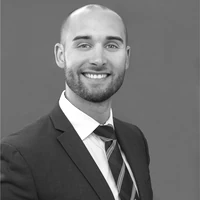
Blaise Delfino, MS, HIS
Blaise Delfino, M.S. – HIS is an innovative leader in the field of hearing healthcare with 11 years of experience as a licensed hearing instrument specialist. With a progressive career spanning operations, sales, marketing, and business management, Blaise possesses a wealth of experience and expertise that has been proven in the audiology private practice setting.
As a former private practice owner, he encountered patients from all walks of life, understanding the diverse financial circumstances they may face. With a steadfast dedication to prioritizing the needs of the patient over financial constraints, Blaise consistently fit patients to their specific hearing needs. This mindset ensured that optimal care and financial accessibility were harmoniously balanced, promoting a patient-centered approach while also maintaining the sustainability and success of the practice.
Known for a forward-thinking and performance-oriented approach, Blaise constantly strives to push the boundaries of innovation in the industry. He invented the world’s first custom adjustable earplug called “Fader Plugs” and hosts a top-rated hearing healthcare podcast, The Hearing Matters Podcast. With a deep understanding of the challenges individuals with hearing loss face, Blaise is dedicated to spreading awareness and improving access to quality care.
In addition to his hands-on experience as a private practice owner, he also serves as the Director of Professional Relations at Starkey Hearing Technologies.