

How do you improve patient outcomes by addressing barriers beyond the audiogram?
AudiologyOnline: Let’s discuss a persistent challenge: why so many people who could benefit from hearing aids simply don’t get them. It seems like it should be a simple choice, but the sources suggest it’s far more complex. What is the biggest hurdle?
Dr. Brandy Pouliot: You’re right; it’s never just about the technology. One of the most significant barriers is stigma. It isn't just one thing; it’s a triple threat involving stigma toward hearing loss, the devices themselves, and the concept of aging. Interestingly, research by Erler and Garstecki suggests that patients actually associate more stigma with the hearing loss itself than with the hearing aids. People often view hearing loss as a sign of being "different" or discredited.
AudiologyOnline: That’s surprising. We often hear that people don't want the aids because they look "clunky." Is that changing?
Dr. Brandy Pouliot: We’ve made progress. More than half of patients today recognize that modern hearing aids are discreet, small, and beneficial. However, there is a massive gap in perception. While users might like them, they believe the general public still views hearing aids as ugly, obtrusive, or only for people over 50. This fear of public judgment—or being laughed at—is real; over half of people with hearing loss feel others treat their condition as a joke, which leads to frustration and discomfort.
AudiologyOnline: So, if a patient is hesitant because of these feelings, how does the provider help them move forward?
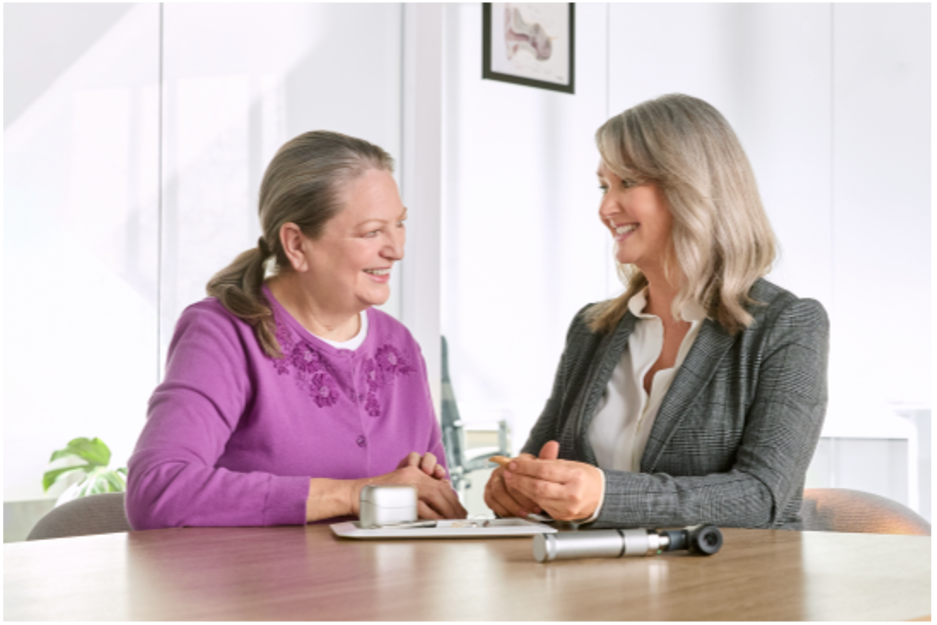
Dr. Brandy Pouliot: It comes down to empathy and trust. Empathy isn’t just being nice; it’s "understanding and sharing the feelings of another". In other healthcare fields, like diabetes care, patients with empathetic providers have significantly better outcomes, such as lower A1c levels. In our field, an empathetic audiologist must look beyond the "data-driven" decision and address the patient's stigma or anxiety.
AudiologyOnline: You mentioned trust as well. Is that just a "nice to have," or does it actually change the numbers?
Dr. Brandy Pouliot: It changes the numbers significantly, especially for a specific group. For people with a severe hearing handicap, the decision to get help is often clear. But for those with a moderate hearing handicap—the people "on the fence"—trust in their healthcare provider is the variable that tips them over to proceeding with treatment. If they don't trust the expert, they stay on the fence.
AudiologyOnline: It sounds like the "human" element is just as important as the "medical" element.
Dr. Brandy Pouliot: Absolutely. In fact, patients today expect a holistic approach. They don’t just want to talk about "audibility." They expect their provider to address cognitive health, socioemotional health, physical health, and even mobility and balance. We are seeing emerging evidence that hearing care supports cognitive health and helps people stay socially active, which improves overall quality of life.
AudiologyOnline: I’ve noticed that sometimes the patient thinks they’re fine, but their family disagrees. Does that play a role in acceptance?
Dr. Brandy Pouliot: A huge role. There is often a disconnect between why a patient says they aren't using hearing aids and what their family sees. Non-users often point to external factors like cost or the fact that no one suggested them. Meanwhile, their family members report that the real barriers are attitudinal, such as the patient not thinking they need them or feeling that wearing them makes them "look old". This is why it’s vital to include family members in the conversation to explore how everyone "feels" about the loss.
AudiologyOnline: It seems like a lot of people are just "hiding" the problem then.
Dr. Brandy Pouliot: Exactly. Disclosure is a major barrier. Just under 27% of people say they would never disclose their hearing loss to anyone under any circumstance. Only about 37% even tell their healthcare professionals. Many patients respond to stigma by carefully choosing when or if to share that they can't hear, depending on the situation. Part of our job is helping them find effective ways to talk about their hearing loss so they feel empowered rather than embarrassed.
AudiologyOnline: To wrap up, what’s the takeaway for someone struggling with this decision?
Dr. Brandy Pouliot: We need to move the conversation beyond just "hearing better." It’s about quality of life. We have to address the emotional resistance and the lack of perceived handicap. When we build that bridge of trust and look at the patient’s health holistically—acknowledging their fears about aging and stigma—we can help them see that hearing aids aren't just about speech; they are about staying connected to their world.


Brandy Pouliot, AuD
Director of Audiology and Education, Sonova
Brandy Pouliot, AuD, is the Director of Audiology and Education for Sonova, US. She earned her Doctor of Audiology degree from Nova Southeastern University and practiced privately until she joined Phonak in 2012 as a Lyric Clinical Trainer. Brandy has presented informative sessions regarding Sonova products, thought leadership topics such as eAudiology, Family Centered Care, cognition, social-emotional and physical well-being, and led experiential trainings locally and globally. Dr. Pouliot is passionate about supporting audiologists and patients to live a life without limitations.