

Q&A with Dr. Jill Firszt: Pioneering Research in Single-Sided Deafness and Cochlear Implants
In January 2022, the U.S. FDA expanded approval of Cochlear’s Nucleus cochlear implants to include individuals with single‑sided deafness (SSD), allowing those with severe‑to‑profound hearing loss in one ear and normal or near‑normal hearing in the other to access cochlear implantation as a treatment option. This milestone highlighted increasing clinical recognition that cochlear implants can offer meaningful benefits for SSD, including improved speech understanding in noise and better sound localization.
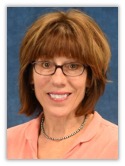
We sat down with Dr. Jill Firszt to discuss her decades of experience treating SSD and the clinical insights that have shaped her approach. She shares practical guidance on evaluating each ear independently, setting realistic expectations, and optimizing outcomes through targeted programming and follow‑up care. Readers will come away with a clearer understanding of how to manage SSD patients more effectively—both in counseling and in day‑to‑day clinical practice.
Question: When you reflect on your career, what would you say are some of your biggest highlights?
Dr. Firszt: There are so many highlights to reflect on. First, I worked clinically for eight or nine years before I went back for my PhD. I had three young children at the time, and finishing my PhD was a significant achievement—it required tremendous support from my family and colleagues to keep everything moving forward.
Beyond that, I've had the privilege of directing cochlear implant programs in three different locations with varying geographical areas and resources. I've been in the field for 40 years, and I couldn't have picked a better 40 years. I saw my first cochlear implant patient in 1985 during the Nucleus 22 clinical trial for adults, my first pediatric patient in 1987, and then FDA approval for children came in 1990. To be there from the very beginning until now and see how the field has progressed—that's truly a highlight.
Question: What led you to the field of audiology?
Dr. Firszt: Interestingly, I was very much into journalism and writing in high school. I was heavily involved with the school newspaper—editor, feature editor, all those kinds of roles. I really thought journalism was what I would do.
During my freshman year of college, there was a girl on my floor who was studying speech and hearing science. I had never heard of that field before. She started telling me about it, and I was very interested. That was pretty much it for me. I did my undergrad, took two years off, and then completed my master's degree—this was before the AuD existed. As soon as I started in the undergrad program, I knew that was what I was going to do.
Question: Single-sided deafness has become one of your major areas of study. What sparked that interest?
Dr. Firszt: I get asked that question often, and there's a specific answer. In my doctoral thesis, the very last person who enrolled in my study had a fascinating hearing history. She had normal hearing until age seven, when she contracted mumps, which left her with profound hearing loss in one ear. She lived with unilateral hearing loss and normal hearing in the other ear for 40 years.
At age 47, she developed an acoustic neuroma in her good ear. The neuroma was removed, but the auditory nerve was severed, leaving her with profound hearing loss. That would have been the ideal ear to implant, but she wasn't a candidate for a traditional implant in that ear. So a month later, she received an implant in the opposite ear.
She was part of my thesis, and I was also working as a clinical audiologist at the center. We discussed expectations extensively. Given the time period—this was 1996 or 1997—and her hearing history, I really wasn't entirely sure how she would do.
Three months after receiving the implant, she had speech understanding for words and sentences through her implant. She had the beginnings of understanding sentences in noise. I was conducting extensive electrophysiology recordings—ABRs, middle latencies, and cortical responses—and all of her electrophysiology looked beautiful. She went on to do really well with the implant.
After I finished my PhD, I kept thinking about her. That patient is the reason I became interested in asymmetric hearing and single-sided deafness.
Key Research Findings and Clinical Implications
Question: What are some of the key themes and takeaways from your research journey?
Dr. Firszt: Over 25 consecutive years of NIH funding, I've conducted numerous studies across different centers. One of the most important findings relates to the onset of hearing loss—whether it's prelingual or postlingual—and how we need to think differently about it in terms of unilateral versus bilateral deafness.
What we've seen in our data is that postlingual adults, especially those with asymmetric hearing or single-sided deafness, can have much longer lengths of deafness and still do well with an implant.
The other important message—and I'm always thinking about this as both a researcher and clinician—concerns FDA-approved candidacy criteria. For asymmetric hearing and single-sided deafness, FDA approval either didn't exist for this population because they didn't have bilateral deafness, or even now, with some indications available, the candidacy criteria are still more restrictive for the poor ear of people who have single-sided deafness.
If you have bilateral profound hearing loss, you could be a candidate with both ears at 70 dB. But if you have asymmetric hearing or single-sided deafness, often the poor ear has to be at 80-90 dB or worse, and <5% word recognition. This creates a different standard for candidacy, and it's something we need to consider as we move forward.
The key message is to really consider each ear separately and think about the status of each ear and how it could best be treated to gain hearing.
Patient Management and Clinical Practice
Question: Is there a difference in how you manage patient care for someone with single-sided deafness versus bilateral hearing loss?
Dr. Firszt: The process is very similar. First, we determine if they're a candidate and ensure they understand what an implant will and won't do. We provide counseling regarding expectations as best we can, though we still can't precisely predict exactly how a person will do. But we have information we can work with to counsel patients appropriately.
Then comes getting the implant, the activation process, and follow-up care. The programming and mapping approach is fundamentally the same. However, there are specific considerations for evaluation and outcome assessment.
Question: How do you evaluate outcomes for patients with asymmetric hearing?
Dr. Firszt: We've always felt it's important to understand what the ear with the implant is doing by itself. We focus on that because we want to give that ear the best clarity and the most optimized outcome possible. We know that when that ear contributes to the normal hearing ear, and they hear with both ears, what they're getting from the implant will contribute to their bilateral performance. This focus also helps with programming and mapping.
If a patient isn't making progress with the implant by itself, then there are questions we start to ask related to our programming. But then, how they put the two ears together is very important. We conduct testing like speech in noise and localization in the bilateral condition. We have a localization system that we can use clinically, but questionnaires are also very helpful, especially for clinical sites that don't have a localization array.
Question: How do you manage expectations for someone with single-sided deafness compared to traditional candidates?
Dr. Firszt: To me, it does impact expectations. Traditional candidates have substantial hearing loss in both ears, and those with single-sided deafness have an opposite normal hearing ear. With all populations, we know something about what to expect with outcomes. We typically expect people to do better with an implant than they did without one—that's why we're recommending it.
But it's still difficult to say specifically how an individual will perform across different tasks. For localization, we can't definitively say "this is what you'll be able to do," or for speech in noise, "this is your exact outcome." However, the counseling is specific to each hearing group, though there are also many common generalities.
One specific consideration for asymmetric hearing is the evaluation approach. How do you evaluate outcomes when you have one really good ear and one poor ear? Do you test in the booth? Do you use direct streaming? Or is it more important to see how they're doing in a normal, everyday situation with both ears active? Ideally, you want all of that data.
Understanding Variability and the Challenge of Device Non-Use
Question: You mentioned variability in outcomes. What factors contribute to this?
Dr. Firszt: We're still working on understanding the variability. Should we be programming differently? Should we be training differently? Does the implant ear in people with single-sided deafness need some other very intentional focus in order for that ear to become stronger and really be able to interact and mix with the normal hearing ear?
Some people do incredibly well with cochlear implants for single-sided deafness. Others don't progress the way we would hope, even though we know their auditory nerve integrity is good based on the fact that they hear with the implant. They get implants, but the outcomes vary considerably.
Question: What concerns you most about current outcomes?
Dr. Firszt: One of the things we don't want to see is non-use. Since I've been in the field for this long period, non-use has happened as our field has evolved. We saw non-use with some of our very early cochlear implants in the late 1980s and early 1990s, and then with sequential cochlear implants, especially in children who maybe got a second side too late. We've seen some non-use.
We're seeing a little bit of this in the SSD population, though it's not consistent. Many children are using their devices for a substantial number of hours a day. But non-use is not what we want, and this is an area we need to understand better.
When I think about outcomes and look at word recognition in the implanted ear, the average for CNC words for adults is around 60 to 62 percent. We've been sitting at that average for quite a long time. I would love to see that average come up. We've done a lot of work changing the candidacy criteria—implanting people with varied lengths of deafness, more residual hearing, fewer people with long-standing profound bilateral hearing loss because they are identified sooner.
So I ask myself: Are there technological aspects from the manufacturer's side that could improve speech recognition outcomes? That's something we may see in the field in the future.
Pediatric Considerations
Question: What about pediatric patients who may not be able to answer questionnaires or provide detailed feedback?
Dr. Firszt: We have a multicenter clinical trial running right now for single-sided deafness, looking at outcomes with cochlear implants. We put a lot of thought into the metrics we're using for this population. We have a number of questionnaires where parents provide ratings and feedback, but the children do as well.
We're getting both children's ratings and parent ratings. The very youngest children are often asked their questions through an interview format. So we're collecting that data, and it's going to be very interesting to look at. It will be particularly interesting to see if the parents and the children are aligned—they might not be.
Looking to the Future
Question: Where do you see changes continuing to occur over the next few years regarding cochlear implants for single-sided deafness?
Dr. Firszt: I think hopefully the candidacy criteria will change so it's not so restrictive for the poor ear. Research and future studies are going to give us more guidance about aural rehabilitation—I think that's going to be a really important area. The brain has to learn how to use these two very different signals.
Studies happening now are also tracking data logging and looking at children who are using their devices more than other children. What are the reasons behind that? We need to understand that much better. This research will help us address the non-use issue and optimize outcomes for all patients with single-sided deafness.
To learn more about SSD from Dr. Firszt, check out her Beyond the Decibels podcast episode here.
Jill B. Firszt, PhD, is a Professor in the Department of Otolaryngology–Head & Neck Surgery and Director of the Cochlear Implant Program at Washington University School of Medicine. Her clinical and research work centers on bilateral and unilateral cochlear implantation in adults and children, asymmetric and unilateral hearing loss, speech recognition, and the optimization of cochlear implant programming. Dr. Firszt earned her BS, MA, and PhD in Speech and Hearing Science and Educational Audiology from the University of Illinois at Champaign-Urbana. Her extensive publication record and decades of investigative work have advanced understanding of auditory perception, electrophysiologic responses to electrical stimulation, and the impact of asymmetrical hearing on communication outcomes.
This material is intended for health professionals. If you are a consumer, please seek advice from your health professional about treatments for hearing loss. Outcomes may vary, and your health professional will advise you about the factors that could affect your outcome. Always read the instructions for use. Not all products are available in all countries. Please contact your local Cochlear representative for product information.
Views expressed are those of the individual. Consult your hearing health provider to determine if you are a candidate for Cochlear technology. Outcomes and results may vary.
©Cochlear Limited 2026. All rights reserved. ACE, Advance Off-Stylet, AOS, Ardium, AutoNRT, Autosensitivity, Baha, Baha SoftWear, BCDrive, Beam, Bring Back the Beat, Button, Carina, Cochlear, 科利耳, コクレア, 코클리어, Cochlear SoftWear, Contour, コントゥア, Contour Advance, Custom Sound, DermaLock, Freedom, Hear now. And always, Hugfit, Human Design, Hybrid, Invisible Hearing, Kanso, LowPro, MET, MP3000, myCochlear, mySmartSound, Nexa, NRT, Nucleus, Osia, Outcome Focused Fitting, Off-Stylet, Piezo Power, Profile, Slimline, SmartSound, Softip, SoundArc, SoundBand, True Wireless, the elliptical logo, Vistafix, Whisper, WindShield and Xidium are either trademarks or registered trademarks of the Cochlear group of companies.
