 From the Desk of Gus Mueller
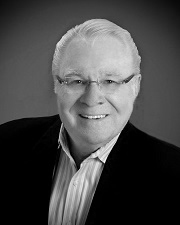
Mead Killion (June 5, 1939 – November 3, 2025). I remember it like yesterday. It was the 1980 ASHA conference in Detroit. I had stopped by my hotel room one evening, and the phone rang. The person on the other end was Mead Killion. I knew who he was, I had been to some of his talks, but we had never met. He asked if I’d like to come over to the Knowles Electronics hotel suite for a beer. I couldn’t quite figure out why he personally called ME, but hey . . . it’s a party! I quickly was on my way.
When I entered the suite, I was a little taken aback. It wasn’t a party. There were three other guys I didn’t know with Mead, all dressed in black suits, white shirts, with narrow solid-black ties. FBI? IRS? Little did I know that these folks, all engineers from Knowles, knew that I had conducted some research (behavioral) and published a few articles on directional hearing aids. I had been invited there for them to “pick my brain.” They quickly realized that there wasn’t much there to pick (enough time for me to drink one Heineken), and I was on my way. But thinking back, it was an incredibly fortunate meeting (for me) as it was the start of a 45-year friendship with a very special person.
Back in those days we didn’t have email or texting, so we used this other means of communication . . . the telephone. Calling Mead became a pretty regular thing, sometimes at odd hours, and he always was happy to share his knowledge on signal processing (on his way to the K-AMP), earmold acoustics, in situ measures, the CORFIG, and yes, even GIFROC. By the late 1980s, he and I were working together to develop a Count-The-Dots audiogram for calculating audibility. I could go on, and on, and just might in this 20Q article.
My relationship with Mead wasn’t unique, as over the years he had a huge impact on the career of many audiologists. One of them is Marshall Chasin, who is with us here at 20Q this month to share some of his memories.
Marshall is the Head of Audiology at the Musicians' Clinics of Canada, Adjunct Professor at the University of Toronto (in Linguistics), and Adjunct Professor at Western University. He has received many prestigious honors and awards over the years, including the Queen Elizabeth II Silver Jubilee Award, the Jos Millar Shield award from the British Society of Audiology, the Canada 150 Medal, and most recently, the Richard Seewald Career Award from the Canadian Academy of Audiology.
Many of you know Dr. Chasin from his writings. He is the author of over 200 articles and 8 books including Music and Hearing Aids (Plural Publishing, 2022). He also writes a monthly column in Hearing Review called Back to Basics, and is the Editor in Chief of the journal Canadian Audiologist, where a few months back he put together an issue packed with “Mead’s Greatest Hits,” which you can read here.
A few weeks ago, Marshall and I started talking about the many contributions of Mead, and realized that many of you probably aren’t aware of the impact he had on our profession, and how his work has changed what you do today. We thought we’d put some of our memories into print and share them with you. Hope you enjoy.
Gus Mueller, PhD
Contributing Editor
Browse the complete collection of 20Q with Gus Mueller CEU articles at www.audiologyonline.com/20Q
20Q: Something about Mead
Learning Outcomes
After reading this article, professionals will be able to:
- Identify the specific features of the K-AMP and its impact on the development of wide dynamic range compression (WDRC) in modern hearing aids.
- Differentiate between the acoustic properties and clinical advantages of insert earphones versus supra-aural earphones.
- Analyze the clinical utility of the QuickSIN and Count-the-Dots audiogram in assessing signal-to-noise ratio (SNR) loss and audibility.
Dr. Gus Mueller: Marshall, before we dive into all kinds of Mead-things, I think you have a little introduction for us?
Dr. Marshall Chasin: I do. Most of our readers probably remember the great Christmas movie It’s a Wonderful Life, where Clarence Odbody, Angel second class, escorted the Jimmy Stewart character around showing him what Bedford Falls would look like if it had not been for him. Years ago, we celebrated the work of Mead Killion in a publication for the Canadian Academy of Audiology, in an issue called “Who is Mead Killion?” I had asked Clarence Odbody, Angel Second Class, to show us what the field of audiology would be like if Mead Killion had not existed, and this is what Clarence found:
We would have no insert earphones, no miniaturized and no low-noise microphones, no musicians’ earplugs, and we would only have a very limited understanding of how to create a wideband, high-fidelity hearing aid. Speech in noise testing wouldn’t be where it is today with the QuickSIN. There is not a clinic in existence today that doesn’t have something about Mead in it. And without Mead, we probably would not have understood the importance of Eddie Villchur- the father of multi-band compression and the air-suspended loudspeaker- or Cy Libby- the manufacturer of the Libby horn, and one of the greatest teachers in the 1980s and 1990s. One thing that was very important to Mead was to acknowledge his teachers and those around him who allowed him to do what he did best. Perhaps his most important teacher was Elmer Carlson whom he worked with when he was at Industrial Research Products, a division of Knowles. Elmer was the designer and patent holder for the “twin tube” technology, and for musicians’ earplugs. With licensing, Mead went on to commercialize Elmer’s ideas as the ER-1, ER-2, and ER-3 insert earphone, and as the ER15 and ER25 musicians’ earplugs.
And before we get going, we should point out that www.MeadShare.com is a well-maintained website with links to most of Mead’s important contributions to our field.
Mueller: Thanks. And thanks to your buddy Clarence. A lot of great Mead things that Clarence brought up are from decades ago, before many (maybe most) of our readers had even thought about audiology as a profession. Seems we need to do a little review of at least some of them, so everyone knows how important to the profession they really were, or still are.
Chasin: I agree, but before we get seriously started, I need to ask one thing before I forget. What was the deal with Mead and the term “Abonso?” I’m pretty sure that for years and years, his email address was “Abonso@ AOL.com”
Mueller: You’re right, that was his email address. “Dr. Abonso” was also his pen name for a column that ran in the 1990s in a Chicago newspaper. It was designed to educate the general population on the workings of and adjustment to hearing aids. All the questions came from this person called “Suspicious Consumer.” The photo that ran with the column did give a pretty good clue regarding who Dr. Abonso might be—see Figure 1.

Figure 1. The famous advice columnist Dr. Abonso (illustration by Fred Waldhauer).
It’s important to point out that Mead was fond of acronyms and making acronyms sound like real words. He used them very effectively in his talks and articles. Mead was also fond of audibility, which the K-AMP did very well, but this audibility was sometimes rejected by patients, especially those who had been using a product with linear processing. ABONSO is an acronym that stands for Automatic Brain-Operated Noise Suppressor Option. I’m not sure exactly when Mead started using it, but I’ll let him tell you about it himself in this quote from a 1993 publication (Killion, 1993):
“The reason no one wants to be seen wearing hearing aids is probably that they don't work well, or at least they didn't. When the problems with such hearing aids are solved, a new/old problem arises: Background noises are often blamed on the hearing aid. The problem is that the user has lost ABONSO (automatic brain-operated noise suppressor option), and the problem persists until the user relearns how to recognize and localize background noises (at which time the brain automatically performs as a highly effective noise suppressor option). Ongoing attempts to replace the brain with a tiny circuit that will somehow reject noises we don't want to hear are unlikely to result in useful devices.”
Chasin: Somehow, when Mead introduced Dr. ABONSO, I had missed reading about the meaning of that acronym… It was at a time when my kids were quite young, and my time was spent reading One Fish, Two Fish, Red Fish, Blue Fish and only had time to skim the “more-technical” publications of that era… although One Fish, Two Fish was very technical at times—I know that Mead came out with many other acronyms over the years.
Mueller: Quite correct. Between the two of us, I think that we came up with most of them (See Table 1). Mead did a lot of stuff that became the mainstay of many clinics. How about we start with the K-AMP. Something I know we both know about firsthand.
Table 1. Some of the terms and Acronyms of Mead Killion.
Chasin: Oh yes, we both were dispensing hearing aids in those days. I am still working in a clinical environment, and not a week goes by that some audiophile or musician doesn’t ask about the K-AMP . . . never did figure out what the K stands for! Mead nailed it in 1988, and we spent the 1990s and maybe up to 5 years ago playing catch-up to this analog innovation. This processing was based on Mead’s PhD dissertation and featured a rock-solid front end that could handle inputs of 115 dB SPL without distortion—great for speech and for live music. Actually, the K-AMP also featured the “first” for a number of other great ideas that are now mainstay in the hearing aid industry—fully functional WDRC featuring a wideband frequency response, a dual time-constant compressor, and the first large-scale use of the class D output stage/receiver; not to mention a smooth “etymotic” response.
I recall that Mead caused a “paradigm shift” in the market with the K-AMP. Instead of becoming “primarily” a hearing aid manufacturer, Etymotic Research decided to license this technology to the hearing aid industry, and I believe that the K-AMP was an option available in the product line of almost every manufacturer.
Mueller: Or the manufacturer tried to copy the processing of the K-AMP! What I remember the most about the early days of this product is that we were all used to doing mostly linear fittings, and even when we did think about AGCi, we were looking at kneepoints of 65-75 dB SPL or higher—I believe the K-AMP kneepoint was ~40 dB SPL. There was the new thinking about the kneepoint trimpot for the K-AMP, where what seemed like up was really down! And, we didn’t have fitting targets for soft inputs in the first few years of the K-AMP—at the time were using fitting methods like POGO and Libby 1/3, maybe NAL-R if we wanted to up our game a little. Today, of course, WDRC processing and targets for multiple inputs are commonplace. Thank you, Mead, for getting us started!
To try to help clinicians understand all this new compression stuff back in the ‘90s, Mead and I wrote a summary article for my Page Ten column in The Hearing Journal (Mueller and Killion, 1996). At the time, the World Wide Web was a hot topic, so we gave the article what we thought was a very clever title: www.compression.edu.
Chasin: I don’t recall that there ever was such a website?
Mueller: There wasn’t. And we took a little heat from readers who had spent considerable time searching for it!
Another thing that is commonplace today are insert earphones; something that almost all audiologists take for granted. I’m guessing that you were around at the time of the switchover from supra-aural to insert earphones in the clinic?
Chasin: Indeed, I was. One of the first things that Mead worked on just after opening up Etymotic Research was a series of insert earphones, which he named ER1, ER2, and ER3 . . . I usually can tell how early an innovation was by the number after “ER”!
Mueller: I recall hearing that there is some connection between the development of insert earphones and Widex hearing aids? True?
Chasin: Oh yes, in the early 1980s, Widex had three behind-the-ear hearing aids (A8, A9, and A18) that had a smooth frequency response but no damper in its earhook to get rid of the “~1000 Hz” peak. This was one of the first commercializations of Elmer Carlson’s twin tube earphone idea—namely, if there was going to be a resonance at 1000 Hz caused by the earhook and earmold tubing, why not design the hearing aid to have a dip around 1000 Hz, such that the net effect was zero, or a smooth frequency response? This is precisely what the twin tube idea was all about—there was an “equivalent” tubing inside the hearing aid that had a dip at 1000 Hz.
Mead jumped on this idea and used about 12” of hearing aid tubing (in his ER3 insert earphone) to connect the insert earphone to an impedance-like eartip, or foam plug, that was fit in the ear canal rather than a traditional TDH over-the-ear earphone. There was an “equivalent” length of tubing inside the device that subtracted off the effect of the 12” of tubing that connected the insert earphone to the ear. This resulted in a flat frequency response. An additional advance was better room attenuation, such that audiometry could be carried out in a quiet office setting. It also served to increase the interaural attenuation difference, and therefore, masking air-conducted sounds was not required as much as with conventional earphones.
Mueller: The insert earphones are now used in so many settings and in so many ways, although my observations are that they are still under-utilized. I recall that in the 1980s and 1990s, audiometers had a small “switching box” that allowed the calibration to be either with TDH earphones or insert earphones, without having to explicitly remember the “corrections” at 6000-8000 Hz.
Wasn’t it about the same time that Mead offered a hearing loss solution for musicians listening to and playing music?
Chasin: This is perhaps what Etymotic Research and Mead Killion are best known for. In 1988, Mead commercialized another one of Elmer Carlson’s ideas. Elmer had worked out the circuitry and its acoustic analog for an ear-worn hearing protector that provided a flat or uniform attenuation across the frequency range from 63 Hz right up to 16,000 Hz, and only with about 15 dB of attenuation. Mead, in doing some work with the Chicago Symphony Orchestra, found that sound levels could be exceedingly high, but the hearing protection of the day muffled the music and divorced the musician from the others playing around them.
The innovation was called the ER15 and provided exactly 15 dB of sound attenuation for low-frequency notes, mid-range notes, and higher frequency harmonics. Music still sounded like music, but now at a safe level. And while 15 dB of attenuation does not sound like a lot, it does mean that the musician could now play 32 times as long as without hearing protection. I am not sure that the ER15 was the 15th product that Etymotic Research came out with, but it sure helped me to remember that the ER15 provided 15 dB of attenuation . . . and in 1992, Mead came out with the ER25 for drummers and other heavier music players, and what a coincidence that the ER25 provided exactly 25 dB of sound attenuation across the frequency range!
Mueller: I know that in more recent years, Mead had been working on an inexpensive way to improve the SNR through an assistive listening device. Each year at the Auditory Society meeting, the “old” IHAFF group would go out to dinner, and you could bet that Mead would bring along one of these devices for each of us to use at the table during the dinner-time stories. I don’t know much about the background, however, of this product?
Chasin: When Mead left Etymotic Research, the new owners agreed to let him develop a product that he had been working on called the Companion Mic in his new company, MCK Audio. MCK Audio was across the parking lot from Etymotic Research and Mead, and a few of his colleagues were hard at work trying to make life easier for those people with hearing loss—sounds like a nice life’s mission to have!
The Companion Mic is a wireless communication device that was designed to enhance communication in noisy environments. This would be particularly useful in health care settings, such as operating rooms, where staff can now have optimal communication despite the incessant background noise. It is also useful in many other noisy locations, as the transmitter portion can be discreetly connected to the speaker’s collar or even slipped onto a mask during flu season. Another great use of the Companion Mic is in musical settings where instructions and other forms of communication can be used discreetly. And, I hear it could even be helpful at IHAFF dinners!
Mueller: It was! Although it probably didn’t have the commercial success as most Mead-things, we can’t leave out the ER-33 Occlusion Effect Meter.
Chasin: Clinically, I would (and still do) ask patients to say the two vowels “eeee” and “aaaa” when fit with hearing aids. In the unoccluded situation, these two vowels sound similar in sound level, but when the ear canal is blocked, the “eeee” skyrockets in sound level. If they are similar when hearing aids are worn, at least I know that I did a good job fitting the hearing aids. We could actually measure that the occluded “eeee” had up to 20 dB higher sound level at 250 Hz than when unoccluded, using a probe-tube microphone, but if that room was busy, using the ER-33 Occlusion Effect Meter was a great alternative—a probe tube microphone in a small box! You did some research regarding the occlusion effect, didn’t you?
Mueller: Right, and some comparisons with Mead’s meter. Today, audiologists seem to have a love affair with open fittings, but back in the 1990s, when CICs had a huge market share, dealing with the occlusion effect was a daily issue. And yes, we did some research and writing on the occlusion topic (Mueller, 1994; Mueller et al., 1996)—in fact, one of the articles was in the well-thumbed “CIC Handbook”, edited by this guy named Chasin (in case you’ve heard of him; Mueller & Ebinger, 1997).
Back in those days, it was very common for patients who had the occlusion effect to say that their voice sounded like they were “talking in a barrel,” so I used that as a title for one of my occlusion articles (Mueller, 2003). Wouldn’t mean too much today—I ask my AuD students each year if any of them have talked in a barrel—it’s just not happening anymore.
Back to the ER-33 for a moment. To treat the occlusion effect, it’s critical to measure the effect in the real ear. That provides an objective way to see if it really exists, and if your treatment is making things better. This is easy to do with probe-mic equipment. Mead recognized, however, that most people fitting hearing aids didn’t own probe-mic equipment, so as you mentioned, he designed the ER-33, a hand-held device about the size of a deck of cards. It didn’t provide all the frequency-specific information that you would get with your probe-mic testing, but good enough to get the job done for most patients.
Chasin: Wasn’t Mead’s article titled “Zwislocki was right” about the occlusion effect?
Mueller: It was, from the late 1980s, I believe (Killion et al., 1988). What I remember most from that article was that the measured example of the occlusion effect was from the earcanal of noted audiologist Laura Wilbur, while she was eating Doritos! Speaking of the occlusion effect, we can’t forget that Mead was also involved with earmold acoustics.
Chasin: Most definitely—one of his inventions that immediately comes to mind is the K-BASS. I recall seeing many people in the early 1980s, some of whom grew up before the introduction of antibiotics, who had long-standing chronic conductive hearing losses and mastoid cavities. This is still unfortunately the case today in many indigenous communities. In many cases, we needed to provide our patients with significant low-frequency amplification (up to 40 dB at 250 Hz) to address chronic middle ear dysfunction, while also having to provide sufficient air-flow to keep the ear as healthy as possible. This seemed like a contradiction until Mead, Chuck Berlin, and Linda Hood (1984) came up with the idea of the “Low-pass” or “K-BASS” earhook, which could be used with BTE hearing aids. This acoustic innovation allowed hearing aid wearers to have optimal low-frequency amplification with an open mold. The K-BASS earhook was very important clinically until Bone Anchored Hearing Aids (BAHA) became clinically available in the early 1990s. I am not as good as Mead was with acronyms, but I am suggesting that two BAHAs be called BAHAHA.
Mueller: Mead was definitely better at making acronyms than you! Before the K-BASS, of course, Mead was working with the horn-effect for earmolds. His lectures on the topic were informative and very entertaining, as of course, he would bring in real horns. For you readers who haven’t thought about earmold acoustics for a while, Mead’s product had the standard 2mm tubing, leaving the BTE tone hook, which then was cemented into 3mm tubing, which then transitioned to a 4mm bore within the earmold. This horn effect provided a nice boost in the 3000 Hz region, exactly where it was needed for hearing aids of the day.
This product was named the “8CR” and was commercially available. The “8” suggested that it would extend the aided frequency response to 8000 Hz, and “CR” was for Canal Resonance—the thought was that the earmold acoustics would restore the canal resonance that was lost when a closed earmold was used. I believe, Marshall, that you reviewed this ground-breaking product in your recent issue of Canadian Audiologist, along with a little story about your letter to Mead.
When they were first introduced, we did some research with these earmolds. The acoustics worked just as advertised, but in actual field trials, the cement holding the different size tubes together sometimes would let loose.
Chasin: And then along came Cy Libby, an Optometrist from Philadelphia. Cy (also known in the literature by the name, E. Robert Libby), ran with Mead’s idea and manufactured a one-piece flared hearing aid tubing that flared from the #13 tubing size (1.96 mm inner diameter) to either a 3 mm or a 4 mm diameter (patented in 1982). These are still available from earmold labs, and I still have some of my patients using them.
The idea was that the Libby horn could provide 6-8 dB of “free” high-frequency amplification over conventional #13 hearing aid tubing. This was a big deal in the 1980s and 1990s, when high-frequency amplification was difficult to obtain without sacrificing battery life. Since the amplification was “after” the hearing aid receiver, battery life was maintained, as was the relationship between the high frequency end of the frequency response curve and the OSPL90 curve (which we called the SSPL90 back in the day). Cy was also a great teacher, and he and Mead would always be at audiology conferences dove-tailing off each other’s ideas. (And I believe that Cy’s son is now an audiologist!)
Mueller: I was at Walter Reed Army Medical Center back then. We were fitting several hundred hearing aids each month, and as you might guess, we had a lot of patients with high-frequency hearing losses, and the “Libby Horn” became the go-to earmold for many patients (mostly with an open fitting). The 4mm often was a little too big, so the 3mm became more common—even without the final 4mm stage, we saw a nice high-frequency boost (Mueller et al., 1981).
Chasin: Changing topics a little, in my younger clinical days, we all used a Count-The-Dots audiogram for patient counseling. I think of it as a Mead-thing, but Gus, weren’t you also involved?
Mueller: It indeed was mostly a Mead-thing, but yes, I did help out. The back story goes something like this. In the late 1980s, Mead and I were both guest speakers at the Scott Haug Audiology Retreat in Texas. He, of course, gave a great talk, but he lost everyone in the audience when, to illustrate the importance of audibility, he used an overhead projector to show a 1962 faded chart of the speech spectrum. This was from an acoustic engineer, in SPL, and there were 200 dots (Cavanaugh et al., 1962). Later that night, over a Shiner Bock or two, I told him I really liked the notion of teaching the importance of audibility, and using the articulation index (AI) makes sense, but 200 dots, in SPL, just doesn’t go over big with clinicians. Clinicians think in HL, and couldn’t we make the same point with fewer dots?
Mead agreed and said something like: “Okay, why don’t you come stay with me for a weekend in Chicago, and we’ll figure something out.” I did just that. As you might guess, Mead did most all of the “figuring,” with some help from Margo Skinner regarding the correct boundaries of the spectrum in HL. I provided examples using unaided and aided probe-mic measures of how this chart could be used by clinicians, and in 1990 we published the first of our two Count-The-Dots audiograms (Mueller and Killion, 1990).
Chasin: There were other easy-to-use AI forms coming out around the same time, weren’t there? Didn’t Chas Pavlovic, one of Robyn Cox’s PhD students, have something?
Mueller: Right. In 1988, Chas published a method that used four key frequencies (30 dB range) on the HL audiogram. Then in 1991, Chas came out with an HL counting method similar to ours (squares rather than dots; Pavlovic, 1991), and this same year, Larry Humes published a similar method with 33 dots instead of 100 (Humes, 1991). See Figure 2 for a comparison of the three. What helped boost the clinical popularity of ours was that we specifically asked David Kirkwood, Editor of The Hearing Journal, that it not be copyrighted. Helping out even more, David had our dots audiogram printed in tablets of 100, and used this as a giveaway at the annual AAA meeting.

Figure 2. A comparison of three different Count-The-Dots (Squares) audiograms to calculate the Audibility Index (from Killion et al., 1993).
Chasin: I remember Mead talking about you and him writing an article in a hot tub. Is this really true, and is this the article he was referring to?
Mueller: Oh yes, it’s true, but that article actually came out a few years later (Killion et al., 1993). While on the road promoting our Count-The-Dots idea, we quickly learned that clinicians had trouble understanding why they should care about an articulation index when their interests were in speech understanding, and not production. So, we wrote a short article titled: “A is for Audibility.” We got Chas and Larry on board as authors, since they also had AI worksheets.
Chasin: Makes sense, but I notice that you seemed to have left out how the hot tub fits in?
Mueller: Well, I’ll give you the short version. For starters, we had no previous plans to write an article that night—it just happened. I was in town doing a talk, had dinner with Mead and Gail, and then went to their apartment to spend the night. Actually, they had two apartments side by side—one was more for work and sleep, the other for fun. In the “fun” apartment, there was a hot tub—in the kitchen—it actually filled up the entire kitchen, making it handy to reach items on the counter, like a writing pad! We jumped in to have an after-dinner beverage (or two), started talking about the fact that “A” standing for articulation was pretty weird. One thing led to another, and by 4:00 a.m. or so, we had written an article (on a damp yellow legal pad). Mead typed it up the next morning.
Chasin: Sounds like a fun night! Earlier, you mentioned the “first” Count-The-Dots audiogram. There is a second one?
Mueller: Oh yes, the one we’ve been using the past 15 years or so. In the revision of the ANSI S3.5 standard in 1997, the old AI was formally replaced by the Speech Intelligibility Index (SII)—we finally got rid of the confusing “articulation” word. The SII calculations are similar, but somewhat different from the AI, and although it took us a while, Mead and I decided we should publish a new SII Count-The-Dots audiogram, which we did in 2010 (Killion and Mueller, 2010; see Figure 3). If you compare the 1990 one in Figure 2 to the 2010 version in Figure 3, you’ll see that they look pretty similar—the density of the dots changed a little for some frequencies, and we added a few dots in the higher frequencies. Ben Hornsby had written a great article comparing the AI to the new SII (Hornsby, 1994), and in it, he talked about our 1990 dots, so before we sent in our article, we sent it to Ben for review. He was mostly pleased with it, however, he did point out that we actually had 101 dots, not 100! We got it fixed before publication.

Figure 3. The 2010 SII version of the Killion-Mueller Count-The-Dots audiogram.
Chasin: I recall that Mead developed his own prescriptive fitting method, which I think was mostly for use with the K-AMP. Was that related to the dots?
Mueller: Only indirectly, but you’re right about the method. In 1994 (or maybe 1993), Mead developed a computerized prescriptive method for fitting hearing aids and named it FIG6 (Killion 1994, Killion 1995). In those days, there was a lot of confusion on how to fit the K-AMP, as many popular fitting approaches were for linear hearing aids. FIG6 provided different gain values for different inputs: 40, 65, and 95 dB SPL.
How it’s related to the dots is that audibility was a big factor of the method—it called for more gain for soft inputs than all or most other prescriptive algorithms available in the early 1990s. For example, for what Mead called a Type A hearing loss, the formula for soft inputs was “Desired Gain = Hearing Loss minus 20 dB, when the loss was 20 to 60 dB.” If you do the math, you’ll quickly see that this approach would provide predicted aided thresholds that would allow for the audibility of all 100 dots, which was the intent.
As the years went on, FIG6 sort of faded away, as other prescriptive methods with fitting targets for different inputs emerged: DSL [i/o], the VIOLA strategy of the IHAFF protocol, and in 1999, the NAL-NL1. I’m not sure if the FIG6 software was ever “commercially” available—I recall Mead simply giving it away. Marshall, what’s your memory of this?
Chasin: I had (and still have) FIG6 on a CD in my office and still use it on occasion. I recall that it was named after the data included in Figure 6 in one of his articles (Killion and Fikret-Pasa, 1993). It serves to remind me about how little gain is required for higher-level inputs such as loud music. For levels typically found with live music, hard-of-hearing listeners with up to a moderate (60 dB HL) hearing loss may require no gain, so a clinical recommendation of mine, at least up to 5 or so years ago, was simply to remove the hearing aids when listening to, or playing live music. (Chasin, 2012). Based on FIG6, this is shown in Table 2. For sensori-neural hearing losses at 1000 Hz (left column), FIG6 shows that up to a moderate level, one may not need any amplification at all.
HL at 1000 Hz 65 dB SPL 80 dB SPL 95 dB SPL
Table 2. For a range of sensori-neural hearing losses at 1000 Hz (left column) based on FIG6, this is the prescribed gain for a number of different input levels, showing that up to a moderate level, for live music (95 dB SPL), one may not require any amplification at all. (Adapted from Chasin, 2012).
Chasin: Gus, you mentioned the IHAFF and the VIOLA fitting method, which I believe was about the same time as the launch of FIG6. Was the IHAFF group something that Mead started? You were a member, right?
Mueller: The IHAFF (Independent Hearing Aid Fitting Forum) had its origin in 1993 and consisted of 12 audiologists, and yes, I indeed was a member— without question, the most enjoyable meetings I’ve had in my career. It was organized by audiologists Dennis Van Vliet and Michael Marion. Mead was a very active member, and at least one of our meetings was at his Etymotic Lab in Elk Grove, and another at his Wisconsin lake cabin. While all of us really liked to hear ourselves talk, the person who got the most work done in between meetings was Robyn Cox—she was the primary one who developed the VIOLA algorithm (Cox, 1995)—like FIG6 VIOLA had targets for soft, average, and loud. But also like FIG6, VIOLA sort of faded away when the other methods for non-linear hearing aids were introduced. What did survive, and has done nicely, is the APHAB, also developed by Robyn. It was recently named as one of the three outcome measures for hearing aids by the NASEM committee (Humes, 2025).
Chasin: I recall that Mead had some innovation with hearing batteries. Did he develop a special battery for use with the K-AMP?
Mueller: No, not the battery itself, but he did develop a couple of applications related to batteries that made life easier for patients. One of these product features sort of happened by accident. It was discovered early on that the K-AMP chip produced a steady, well-controlled audible sound when the battery voltage dropped below 1.1v, a voltage level typically reached a few hours before the battery is expended completely. As reviewed by Gail Gudmundsen (2000), the detector’s warning sound starts as a slow ticking, which becomes faster and louder (like a motorboat) as the voltage drops. As the battery voltage drops below 1.1v, both the frequency and the intensity of the motor-boating sound increase. The warning starts while the battery is still functioning, so the hearing aid user has advanced warning up to several hours before the battery dies. It was only reasonable to take this serendipitous finding and turn it into a feature—it took on the name “LOBAT.”
Gudmundsen (2000) reports on three user surveys (total n>2,000 hearing aid users) regarding the popularity of LOBAT. In general, ~85% of users rated LOBAT “desirable” or “highly desirable.” Today, of course, almost all digital hearing aids have some sort of low-battery warning—beeps or a simple melody.
Chasin: I think that Mead also came out with something that sounded like it belonged in Star Wars—weren’t there creatures on the forest moon Endor, called Ewoks?
Mueller: I’ve never been on (or in) a forest moon, but you are correct about the acronym. It was called EWOK—Either Way OK, something that was picked up by at least one hearing aid company—Qualitone. Instead of struggling to determine which way to place the battery in the hearing aid compartment, the patient could place it “either way,” and the hearing aid still functioned properly. Gail Gudmundsen (Mead’s wife and Audiologist) tells us that they had a contest at Etymotic to name this feature. She and Larry Revit (no relation to Harry Levit) both came up with EWOK, and split the (very small) prize!
Chasin: Let’s move on to speech testing. I use the QuickSIN all the time in my clinic. A Mead test, right?
Mueller: Right, it certainly is a product from Mead and Etymotic Research, and surveys have shown that it’s the most popular speech-in-noise test used in clinics in the U.S. Its popularity has grown substantially since it has become pretty standard to load it as part of the software package on audiometers sold today, along with automatic scoring! Todd Ricketts, Ben Hornsby, and I did a review article on speech-in-noise testing a couple of years ago, and a good portion of that article discusses the workings of the QuickSIN and the different ways that it can be used clinically (Mueller et al., 2023).
Chasin: Didn’t Mead have another speech test before the QuickSIN?
Mueller: Before the QuickSIN became “quick,” it simply was the SIN test (Killion and Fikret-Pasa, 1993). Over the years, the SIN was studied for validity and reliability by, among others, two of Mead’s fellow IHAFF members, Ruth Bentler and Robyn Cox (Bentler, 2000; Cox et al., 2001). Based on these studies and other data collected by Mead’s group, the SIN was refined and shortened, and the QuickSIN was launched in 2004.
While the QuickSIN is an adaptive test, it is scored as SNR-Loss rather than SRT-50, as one would score the HINT or the WIN. In other words, how does this person’s score differ from someone with normal hearing? It is also somewhat unique in that the speaker is a woman, and the background noise is a 4-talker babble—yes, this means that there could be informational masking—but many argue that that just makes it more realistic.
A quick note for clinicians: A few years after the release of the QuickSIN, Rachel McArdle and Richard Wilson did a study of the difficulty of the different lists for both normal hearing and hard-of-hearing individuals (McArdle and Wilson, 2006). They found that only 7 of the 12 original lists provided homogenous results for both listeners with and without hearing loss: 1, 2, 6, 8, 10, 11, and 12. Something to keep in mind if you’re using the QuickSIN in the clinic.
Chasin: Gus, you mentioned that the QuickSIN is the most popular speech-in-noise test, but despite the efforts of Mead and others, this testing has always been slow to catch on. I remember that several years ago, Richard Wilson (2011) correctly pointed out that if an audiologist has the choice to conduct either word recognition in noise or word recognition in quiet, the choice clearly would be SIN testing.
Mueller: Right, if only one of two tests predicts the other, and you only have time to do one of the two, do the one with the best predictive value. This very notion has been supported by the recent work of Matt Fitzgerald et al. (2023). Based on data collected from 1000s of patients at their Stanford clinics, using the QuickSIN, these authors concluded that QuickSIN measures should be the default test of speech perception in routine audiometric testing, and that word recognition in quiet should only be performed when it is likely to be suboptimal (based on QuickSIN cut-off scores).
Another article that was published recently relates to the use of QuickSIN findings as a screening tool for retro-cochlear pathology. I’m pretty sure that Mead and colleagues didn’t design the QuickSIN for this purpose, but hey, if it works? Again, from Stanford University, researchers reported data related to 73 individuals with confirmed vestibular schwannomas (Qian et al., 2023). Statistical analysis showed that the right versus left ear asymmetry observed for the QuickSIN score was more sensitive and specific for detecting vestibular schwannomas than the pure-tone average asymmetry or the word-recognition-in-quiet asymmetry. Like many innovations in audiology, it takes about 20 years to be “discovered”—think insert earphones as another example, which we discussed earlier.
Chasin: Hopefully, these new data from Matt Fitzgerald’s group will help move things along.
Mueller: One way to know when an audiologic test is popular is when it starts to move over to the social aspects of audiology. I’m pretty sure that back in the mid-1960s, when Tillman and Carhart developed Northwestern University Auditory Test No. 6, they never dreamed that “Say The Word Laud” would be printed on hundreds of t-shirts. This past Halloween, the costume for the 3rd year students at the University of South Dakota was that everyone wore a white silk jacket, but all had different kinds of shoes. These costumes were in homage to the QuickSIN (List 1, Sentence 1: “A white silk jacket goes with any shoes).
Chasin: When we get to the point of talking about Halloween costumes, it’s probably time to call it quits for our little discussion.
Mueller: I agree. Thanks for sharing your insights and memories! And more importantly, thank you, Mead!

References
Bentler, R. A. (2000). List equivalency and test-retest reliability of the Speech in Noise Test. American Journal of Audiology, 9(2), 84–100.
Cavanaugh, W., Farrell, W., Hirtle, P., & Walers, B. (1962). Speech privacy in buildings. The Journal of the Acoustical Society of America, 34(4), 475–483.
Chasin, M. (2012). Okay, I’ll just say it: Maybe people should just remove their hearing aids when listening to music. The Hearing Review, 19(3), 74.
Cox, R. M. (1995). Using loudness data for hearing aid selection: The IHAFF approach. The Hearing Journal, 48(2), 10, 39–44.
Cox, R. M., Gray, G. A., & Alexander, G. C. (2001). Evaluation of a revised speech in noise (RSIN) test. Journal of the American Academy of Audiology, 12(8), 423–432.
Etymotic Research. (2005). BKB-SINTM speech in noise test version 1.03 [Compact disc]. Etymotic Research.
Fitzgerald, M. B., Gianakas, S. P., Qian, Z. J., Losorelli, S., & Swanson, A. C. (2023). Preliminary guidelines for replacing word-recognition in quiet with speech in noise assessment in the routine audiologic test battery. Ear and Hearing, 44(6), 1548–1561.
Gudmundsen, G. (2000). Audible low-battery warnings: Standard or optional? The Hearing Review, 7(6).
Hornsby, B. Y. W. (2004). The Speech Intelligibility Index: What is it and what's it good for? The Hearing Journal, 57(10), 10–17.
Humes, L. E. (1991). Understanding the speech-understanding problems of the hearing impaired. Journal of the American Academy of Audiology, 2(2), 59–69.
Humes, L. (2025). 20Q: Meaningful outcome measures for hearing interventions in adults. AudiologyOnline, Article 29355. https://www.audiologyonline.com
Killion, M. (1994). Fig6.exe software: Hearing aid fitting targets for 40, 65 & 95 dB SPL inputs (Version 1.01D) [Computer software]. Etymotic Research.
Killion, M. (1995). Loudness-data basis for "FIG6" hearing aid fitting targets. The Journal of the Acoustical Society of America, 98(5), 2927–2927.
Killion, M., & Fikret-Pasa, S. (1993). The three types of sensorineural hearing loss: Loudness and intelligibility considerations. The Hearing Journal, 46(11), 31–36.
Killion, M., Mueller, H. G., Pavlovic, C., & Humes, L. (1993). A is for audibility. The Hearing Journal, 46(4), 29.
Killion, M., Wilber, L., & Gudmundsen, G. (1988). Zwislocki was right: A possible solution to the "hollow voice" problem (the amplified occlusion effect) with deeply sealed earmolds. Hearing Instruments, 39(1), 14–18.
Killion, M. C. (1993). The K-Amp hearing aid: An attempt to present high fidelity for persons with impaired hearing. American Journal of Audiology, 2(2), 52–74. doi.org/10.1044/1059-0889.0202.52
Killion, M. C., Berlin, C. I., & Hood, L. (1984). A low frequency emphasis non-occluding hearing aid. Hearing Instruments, 35(8), 30–34.
Killion, M. C., & Mueller, H. G. (2010). Twenty years later: A new count the dots method. The Hearing Journal, 63(1), 10–17.
Killion, M. C., Niquette, P. A., Gudmundsen, G., Revit, L. J., & Banerjee, S. (2004). Development of a quick speech-in-noise test for measuring signal-to-noise ratio loss in normal-hearing and hearing-impaired listeners. The Journal of the Acoustical Society of America, 116(4), 2395–2405.
McArdle, R. A., & Wilson, R. H. (2006). Homogeneity of the 18 QuickSIN lists. Journal of the American Academy of Audiology, 17(3), 157–167. doi.org/10.3766/jaaa.17.3.2
Mueller, H. G. (1994). CIC hearing aids: What is their impact on the occlusion effect? The Hearing Journal, 47(11), 29–35.
Mueller, H. G. (2003). There’s less talking in barrels, but the occlusion effect is still with us. The Hearing Journal, 56(1), 10–18.
Mueller, H. G., & Ebinger, K. A. (1997). Verification of the performance of CIC hearing aids. In M. Chasin (Ed.), CIC handbook. Singular Publishing.
Mueller, H. G., & Killion, M. C. (1990). An easy method for calculating the articulation index. The Hearing Journal, 43(9), 14–17.
Mueller, H. G., & Killion, M. C. (1996). http://www.compression.edu. The Hearing Journal, 49(1), 10, 44–47.
Mueller, H. G., Bright, K. E., & Northern, J. L. (1996). Studies of the hearing aid occlusion effect. Seminars in Hearing, 17(1), 21–32.
Mueller, H. G., Ricketts, T., & Hornsby, B. Y. G. (2023). 20Q: Speech-in-noise testing - too useful to be ignored! AudiologyOnline, Article 28760. https://www.audiologyonline.com
Mueller, H. G., Schwartz, D., & Surr, R. (1981). The use of the exponential acoustic horn in an open mold configuration. Hearing Instruments, 32(10), 22–24.
Pavlovic, C. (1991). Speech recognition and five articulation indexes. Hearing Instruments, 42(9), 20–24.
Pavlovic, C. V. (1988). Articulation index predictions of speech intelligibility in hearing aid selection. ASHA, 30(6), 63–65.
Qian, Z. J., Vaisbuch, Y., Gianakas, S. P., Tran, E. D., Blevins, N. H., & Fitzgerald, M. B. (2023). Evaluation of asymmetries in speech-in noise abilities in audiologic screening for vestibular schwannoma. Ear and Hearing, 44(6), 1540–1547.
Citation
Chasin, M. & Mueller, G. (2026). Something about Mead. AudiologyOnline, Article 29546. Available from www.audiologyonline.com