
Question
What clinical documentation is required for replacement sound processor orders?
Answer
Clinical documentation requirements have recently changed. You may have heard that Letters of Medical Necessity are no longer required by payers for your patients’ sound processor replacements, which patients know as sound processor upgrades. Instead, payers are now requesting you send clinical chart notes to include reasoning for the replacement, plus a generic prescription, as the clinical documentation for the replacement sound processor order.
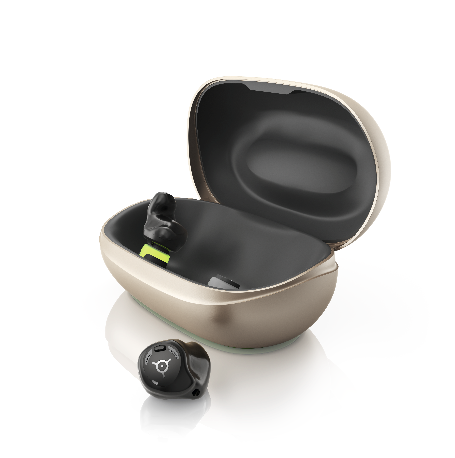
Access to cochlear implants and bone conduction solutions has expanded, resulting in more patients than ever considering a sound processor replacement. We know these patients are contacting you with needs for the latest technology, particularly as new innovations become available. For example, in a survey of recipients who upgraded from a Nucleus® 7 Sound Processor to a Nucleus 8 Sound Processor, half reported less listening fatigue after upgrading.‡1 Additionally, 2 out of 3 surveyed say they now hear better in noisy environments with their Nucleus 8 Sound Processor.#§1
Due to the changes in payer requirements and potential increase in patients seeking sound processor replacements, Cochlear has updated our clinical documentation process to help streamline it for you and your patients. We ran a Pilot Program of this new process, and clinicians reported that ease of ordering improved by 43% and processing time decreased by 24%.2
Learn about these changes and the new process while earning CEUs through this 30-minute on-demand Audiology Online course.
References
1. Internal data (March 2025), ROI Rocket, Recipient Survey
2. Clinic Chart Notes Pilot Program, Cochlear North America, October 2024. Internal data on file.
‡ Based on a survey of over 380 recipients who upgraded from the Cochlear™ Nucleus® 7 to the Nucleus® 8 Sound Processor
* Surveyed recipients who upgraded from Nucleus® 7 Sound Processor to Nucleus® 8 Sound Processor with SmartSound® iQ2 with SCAN2 and ForwardFocus technology enabled.
#ForwardFocus can only be enabled by a hearing implant specialist. It should only be activated for users 12 years and older who are able to reliably provide feedback on sound quality and understand how to use the feature when moving to different or changing environments. It may be possible to have decreased speech understanding when using ForwardFocus in a quiet environment.
§ SNR-NR, WNR, and SCAN are approved for use with any recipient ages 6 years and older who is able to 1) complete objective speech perception testing in quiet and in noise in order to determine and document performance 2) report a preference for different program settings.
Continued and its subsidiaries provide professional education authored by qualified Subject Matter Experts for continuing education purposes. These materials are intended for educational purposes and do not constitute medical advice or a substitute for individual clinical judgment. Continued is not a clinical healthcare provider; the licensed professional is solely responsible for ensuring that the application of any techniques or information presented is within their legal scope of practice and jurisdictional requirements.